
No products
Prices are tax included

Tap water treatment
Pre-filter, water purifier or limescale prevention solution: the right choice depends mainly on your actual needs. Whether it’s impurities in the water, a bad taste, drinking water or limescale on appliances, each situation calls for a different solution.
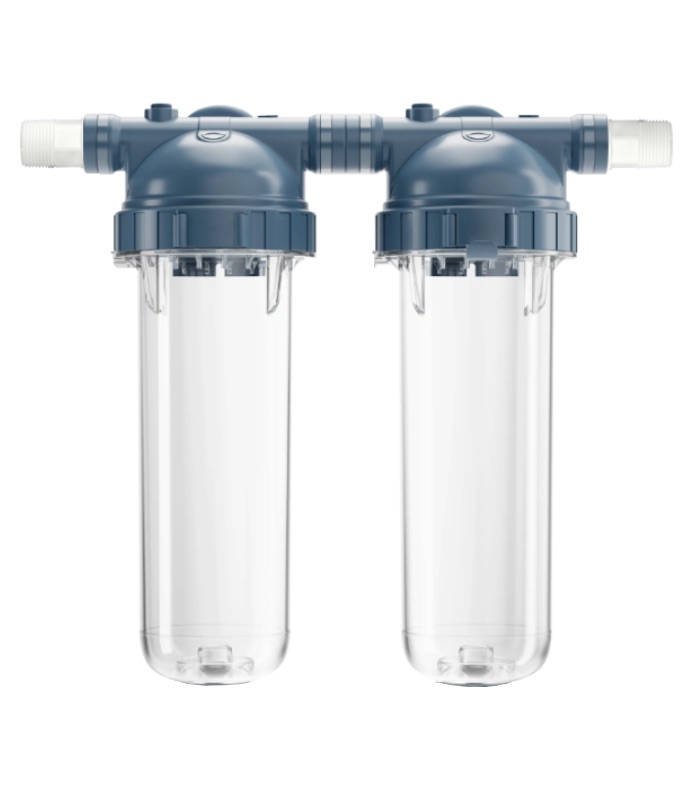
Why treat the water in your home?
People often talk about “water filters” as if they were all the same type of product. In reality, there are several categories of solutions designed to meet very different needs.
Before making a choice, it is important to distinguish between three objectives: removing impurities, improving the quality of drinking water and minimising the effects of limescale. It is this distinction that enables you to design a coherent system and avoid confusion.
The three main categories of water filtration and treatment
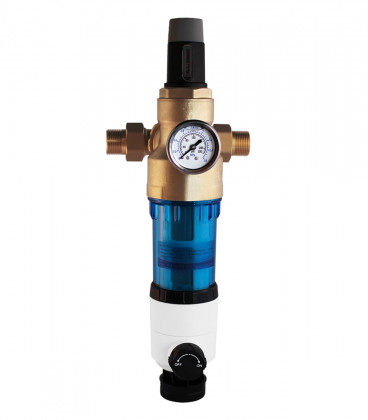
1 - The general-purpose water filter
It is also known as a pre-filter. Its role is to trap the largest impurities in the water: sand, silt, rust, particles and deposits from the mains supply.
Fitted to the main water supply, it protects the pipework, the water heater, the boiler and household appliances. It is often the first step in a well-planned installation.
Depending on the filter holder and cartridge chosen, this filtration process can also be supplemented with specific media such as activated carbon to improve certain aspects of user comfort.
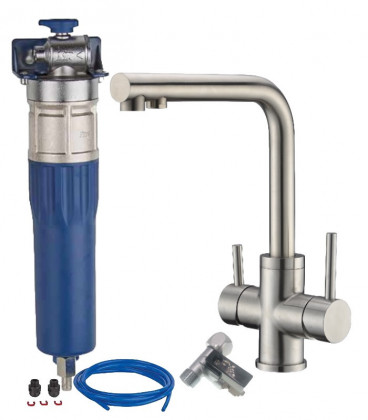
2 - The water purifier
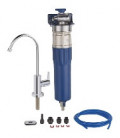
The water purifier is designed to improve the quality of water used for drinking and cooking. It is usually installed under the sink, with either a dedicated tap or a three-way mixer tap, depending on the setup.
Its purpose is different from that of a pre-filter: it provides a more refined level of purification for drinking water, depending on the cartridges and technologies used.
If you’re looking for water that tastes better, is more pleasant to drink on a daily basis, or is better suited for drinking, this is generally the type you should go for.
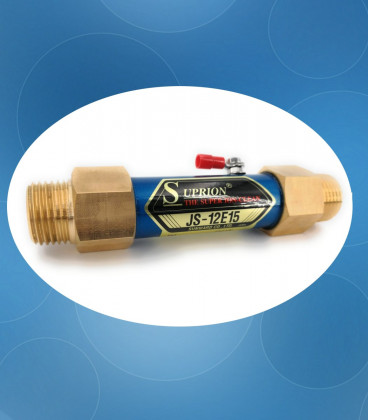
3 - Limescale treatment
Limescale is a particular problem when it comes to deposits on heating elements, taps, walls and appliances that heat water. In this case, the main priority is not necessarily the purification of drinking water, but rather the protection of the system and user comfort.
It is therefore important to distinguish clearly between scale treatment and the filtration of drinking water. In many cases, these two approaches complement one another.
Depending on your needs, we can recommend either a dedicated limescale prevention system or a more comprehensive solution that includes pre-filtration and purification.
Which water filter should you choose for your situation?
| Your main requirement | The most suitable solution | Where should I install it? |
|---|---|---|
| Sand, sludge, rust, particles in the water | Pre-filter / general-purpose water filter | At the main water supply |
| Taste, smell and comfort of drinking water | Water purifier | Under-sink / point of use |
| White marks, limescale, limescale-clogged water heater | Limescale treatment | At the main water supply |
| Protecting the home and improving drinking water | A combination of several solutions | Water supply + kitchen |
The right choice therefore depends less on a “best all-round filter” than on the actual problem to be solved. For many households, the most logical approach is to take a two-pronged approach: protecting the plumbing system on the one hand, and treating drinking water at the point of use on the other.
Improve the taste, smell and comfort of the water
When a household is looking for a water treatment system, the motivation is not always purely technical. It may be due to a bad taste, a smell of chlorine, a desire for everyday convenience, or a wish to reduce the amount of bottled water purchased.
With this in mind, a water purifier or certain specific filter cartridges may be more suitable than a simple pre-filter, as they do not serve the same purpose.
What to consider before buying
Before choosing a system, ask yourself three simple questions: Do I want to protect the whole house? Do I mainly want to improve the quality of my drinking water? Or is my real problem limescale?
Once this need has been identified, the choice becomes much simpler: pre-filter for impurities, water purifier for drinking water, anti-limescale for limescale deposits, or a combination of both if you want a more comprehensive treatment.
Our categories to help you find the right solution
FAQ – Which water filter should I choose?
What is the difference between a water filter and a water purifier?
A standard water filter mainly removes the coarsest impurities, thereby protecting the system. A water purifier treats drinking water more thoroughly, usually at the point of use.
Which system should you choose to combat limescale?
If your main concern is limescale build-up on your appliances, you should focus on limescale prevention rather than simply filtering your drinking water. The right choice will depend on the type of system and your actual needs.
Should the whole house be treated, or just the kitchen tap water?
It all depends on the objective. To protect pipes and appliances, the water supply is usually treated. To improve the quality of drinking water, an under-sink or point-of-use system is often the most appropriate solution.
What is the first thing to look for before buying?
The first factor to consider is the problem you want to solve: impurities, drinking water, taste, odour or limescale. This is what determines the right product range.
- « Previous
- 1
- 2
- Next »
- 1,20 € tax incl. 64In Stock
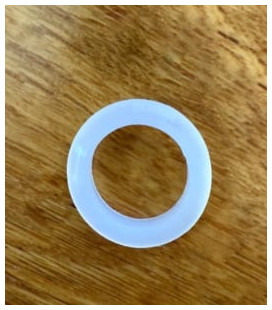
1 silicone gasket
Provide a tight seal between the quartz tube and the stainless steel reactor. - 39,99 € tax incl. 45,58 € 100In StockReduced price!
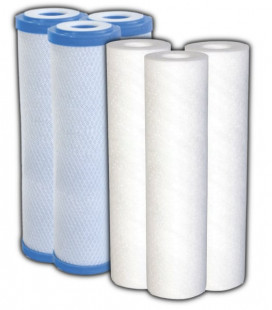
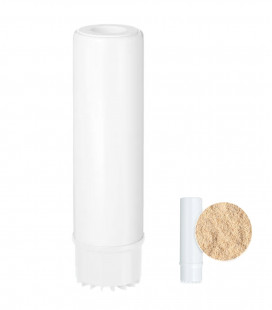
A cheap price for your activated carbon and sediment filter cartridges
You can store them and benefit from an advantageous price. - 5,30 € tax incl. 263In Stock
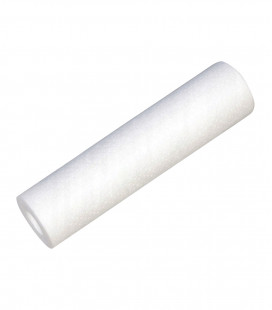
Efficient deposit filtration.
- retains rust, sand and silt
- degraded structure technology - extended service life
- deep filtration effectively traps contaminants
- Technology that increases the effective filtration area
- cartridge replacement indicator
For 10-inch filter holders.
- 9,89 € tax incl. 245In Stock
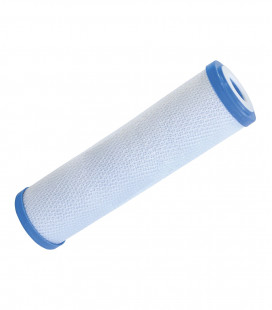
Replacement cartridge for activated carbon filtration 10 µm.
For 10 inch filter doors.
- 5,30 € tax incl. 64In Stock
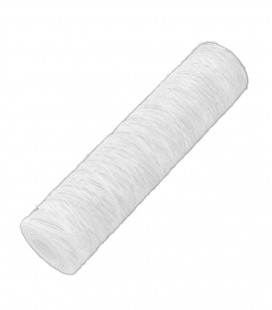
Efficient deposit filtration.
- retains rust, sand and silt
- degraded structure technology - extended service life
- deep filtration effectively traps contaminants
- Technology that increases the effective filtration area
- cartridge replacement indicator
For 10-inch filter holders.
- 12,90 € tax incl. 67In Stock
Unique filtration cartridge for the whole house!
Ideal for use with a 1-tank water filter
and those who are short of space.compact 2-in-1 cartridge:
- removes sediment down to 5 microns (sand, silt, rust, etc.)
- eliminates unpleasant odours from water
- eliminates bad taste from water
The essentials of water treatment in a single filter cartridge.
For standard 10" inch filter holder. - 14,70 € tax incl. 108In Stock
Coconut granule activated carbon
High-efficiency cartridge.
Fits a 10-inch filter holder.- improves the smell and taste of water
- eliminates chlorine and pollutants
- more effective at adsorbing VOCs
- ideal as a complement to a block carbon cartridge
- pre-filtration of sediment to 5 microns
- 17,40 € tax incl. 90In Stock
Bacteriostatic activated carbon
Anti-bacterial.
- activated carbon from coconut shells (NSF certified).
- Silver impregnated - inhibits bacterial growth. (KDF)
- removes unwanted impurities from water
- improves taste and smell
Cartridge suitable for 10-inch filter doors.
- 17,40 € tax incl. 52In Stock
Specifically designed to remove iron, manganese and hydrogen sulphide
- removes rotten egg smell
- removes brown discolouration from water
- prevents the formation of rust stains
- removes iron and manganese compounds from water
- 5 μm pre-filtration eliminates mechanical impurities
- 13,80 € tax incl. 38In Stock
This mineralising cartridge guarantees optimal water quality, similar to that of natural mineral water.
- enriches water with minerals and elements
- increases the pH of the water
- improves the taste of water
- partially removes impurities (sediment)
- 19,80 € tax incl. 88In Stock
For 10-inch filter holder - FLAR
- effectively eliminates arsenic
- eliminates fluorides and heavy metals
- longer contact between the fluid and the water improves filtration quality
- made in Central Europe - Poland
- highest quality guaranteed
- the product is totally safe
- 29,90 € tax incl. 34,80 € 116In StockReduced price!
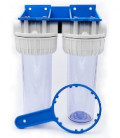
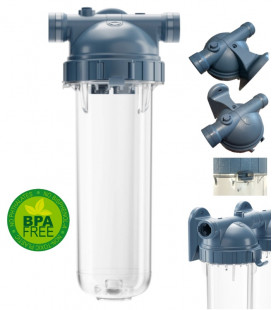
BPA-free modular filter holder
- Bare model without connectors
- remember to add accessoriesCan be used with standard 10" inch cartridges:
- activated carbon filter(taste + odour + pollutants)
- sediment filter(retains organic impurities)
- sediment and activated carbon filter(2 in 1 cartridge)
- anti-iron filter(eliminates rust - brown colour)
Cartridges and connectors can be seen at the bottom of the page
- 3,30 € tax incl. 14In Stock
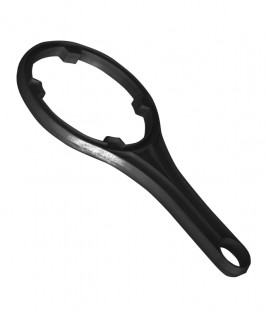
A simple, effective spanner
to loosen the tanks of your modular filters. - 4,80 € tax incl. 79In Stock
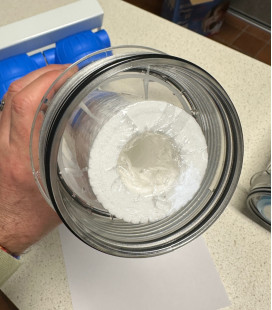
An essential accessory for filter doors.
These rings make it easy to centre the filter cartridges so that they are properly aligned when reassembled.
- 7,68 € tax incl. 31In Stock
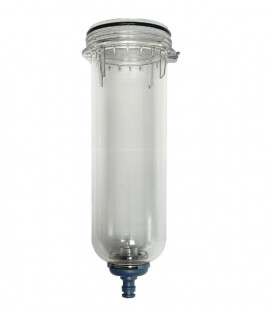
You've dropped your bowl and it's broken.
Here's the complete replacement part:
- the bowl (BPA-free)
- the O-ring
- the purge complete with locking shim
- the clamping locking system - 3,00 € tax incl. 16In Stock
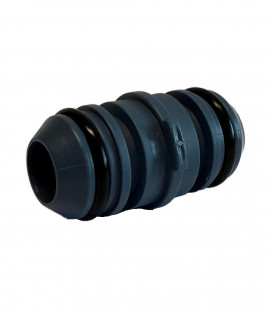
Connect your modular filter holders together easily.
This accessory provides an instant seal without the need for screws or consumables. - 3,00 € tax incl. 41In Stock
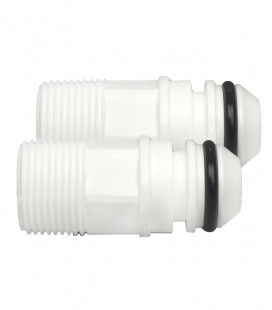
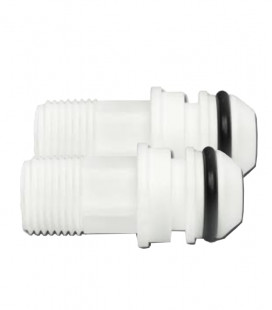
Easily install your modular filter holder with these two 20/27 (3/4") connectors.
These accessories allow you to adapt the two outlets of the filter holder to the thread size required for your project. - 3,00 € tax incl. 37In Stock
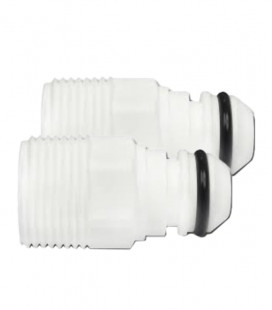
Easily install your modular filter holder with these two 26/34 (1") connectors.
These accessories allow you to adapt the two outlets of the filter holder to the thread size required for your project. - 3,00 € tax incl. 31In Stock
Easily install your modular filter holder with these two 15/21 (1/2") connectors.
These accessories allow you to adapt the two outlets of the filter holder to the thread size required for your project. - 3,00 € tax incl. 45In Stock
Easily use your modular filter holder with these two 6 mm (1/4") tube connectors.
These accessories allow you to adapt the two outlets of the filter holder to a 1/4" automatic connector. - 4,20 € tax incl. 52In Stock
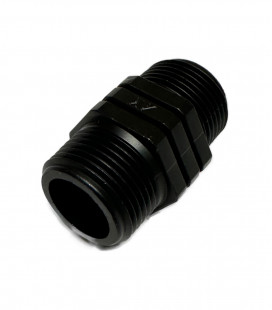
Nipple, 3/4" connector (20/27)
A dedicated product for connecting a filter / filter holder
- 2,70 € tax incl. 168In Stock
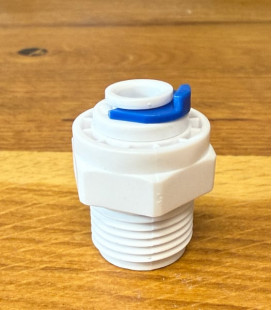
3/8 inch (12-17) connector for 6 mm to 6.5 mm plastic food hoses. (1/4 inch)
- 2,70 € tax incl. 198In Stock
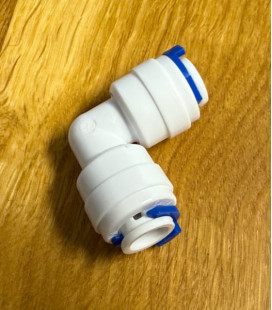
Automatic push-fit fitting - 90° elbow - for 6 mm to 6.5 mm (1/4 inch) plastic food pipes
- 2,70 € tax incl. 182In Stock
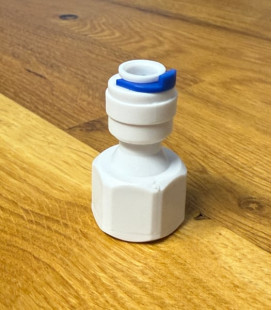
3/8 inch (12-17) female fitting for 6 mm to 6.5 mm (1/4 inch) plastic food tubing
- 2,70 € tax incl. 375In Stock
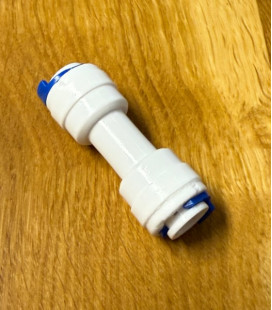
Straight push-fit fitting for 1/4 - 1/4 - plastic food pipe tolerances from 6 mm to 6.5 mm (1/4 inch)
- 1,80 € tax incl. 184In Stock
It is very useful in plumbing:
- Preserves seals by preventing them from sticking
- Prevents oxidation of screws and nuts, making fittings easy to dismantle over time
- Facilitates the assembly of plastic or metal fittings
- 4,50 € tax incl. 55In Stock
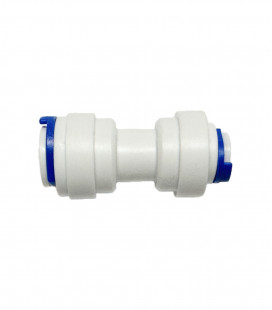
This type of fitting allows you to adapt a 3/8" tube to a 1/4" inch tube
3/8" corresponds to 9.52mm with a tolerance of approximately 8 to 10mm.
1/4" corresponds to 6.35mm with a tolerance of approximately 6 to 7mm - 29,90 € tax incl. 26In Stock
With this appliance, we're declaring war on limescale deposits in your washing machine and dishwasher.
- easy to use by screwing it onto 1 tap
- prevents the formation of limescale
- softer linen
- cleaner dishes
- A simple, durable product
- 10,00 € tax incl. 977In Stock
Specific product not listed in our catalogue.




- « Previous
- 1
- 2
- Next »





 English
  Français
  Deutsch
  Italiano
  Español
  Belgium