
No products
Prices are tax included
SUPRION is an electrostatic salt-free anti-limescale solution requiring no dedicated electrical power supply and no regeneration. It is designed to reduce the effects of limescale while keeping the calcium and magnesium naturally present in the water. The right model mainly depends on the flow rate, pipe diameter and requirements of your installation.
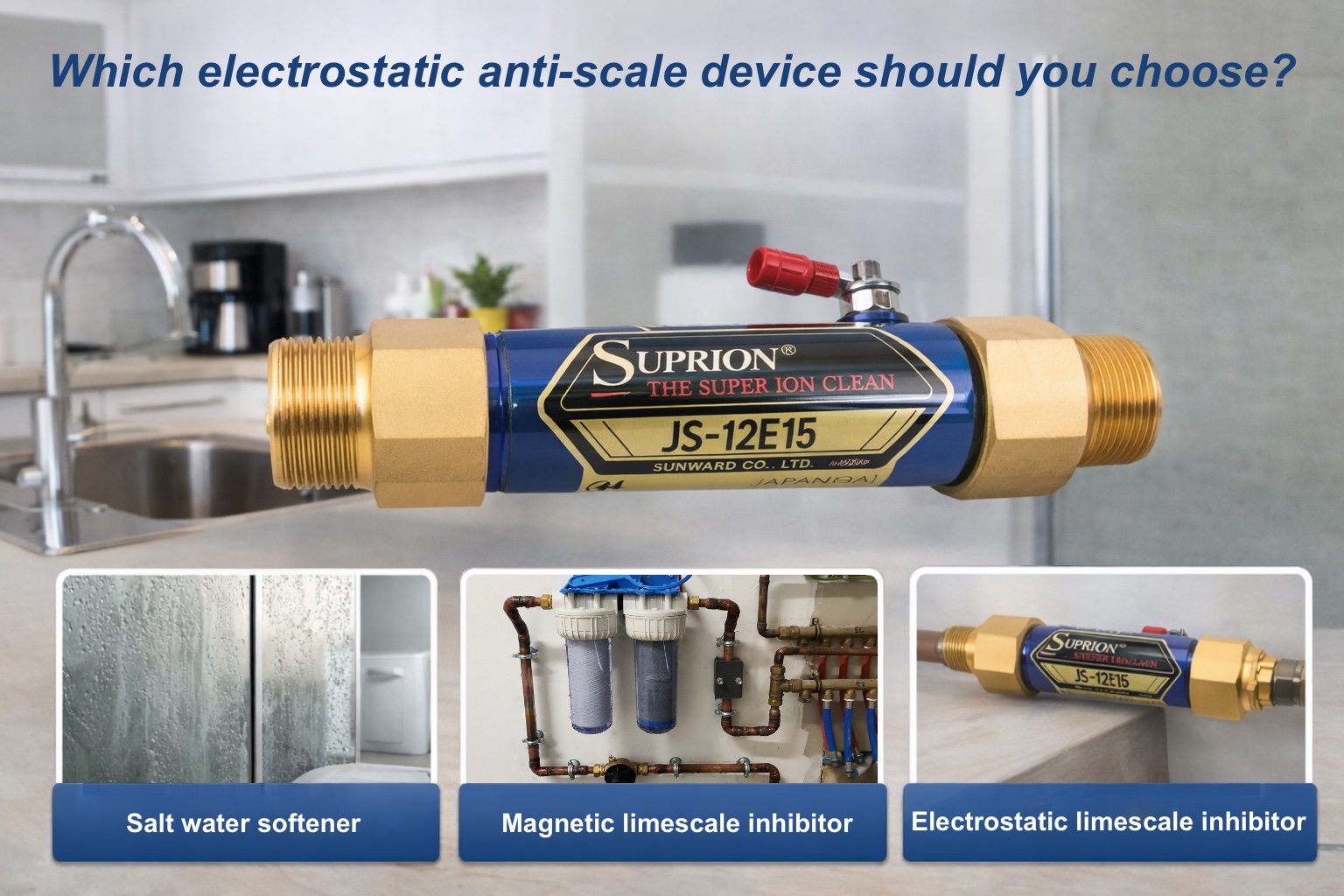
What is an electrostatic salt-free water softener?
The term “salt-free water softener” is commonly used to describe systems designed to reduce the effects of limescale without using ion-exchange resin or regeneration salt.
More precisely, SUPRION belongs to the family of electrostatic anti-limescale devices. Its operating principle differs from that of a conventional water softener: the minerals responsible for water hardness remain in the water, while the device aims to influence their behaviour during crystallisation.
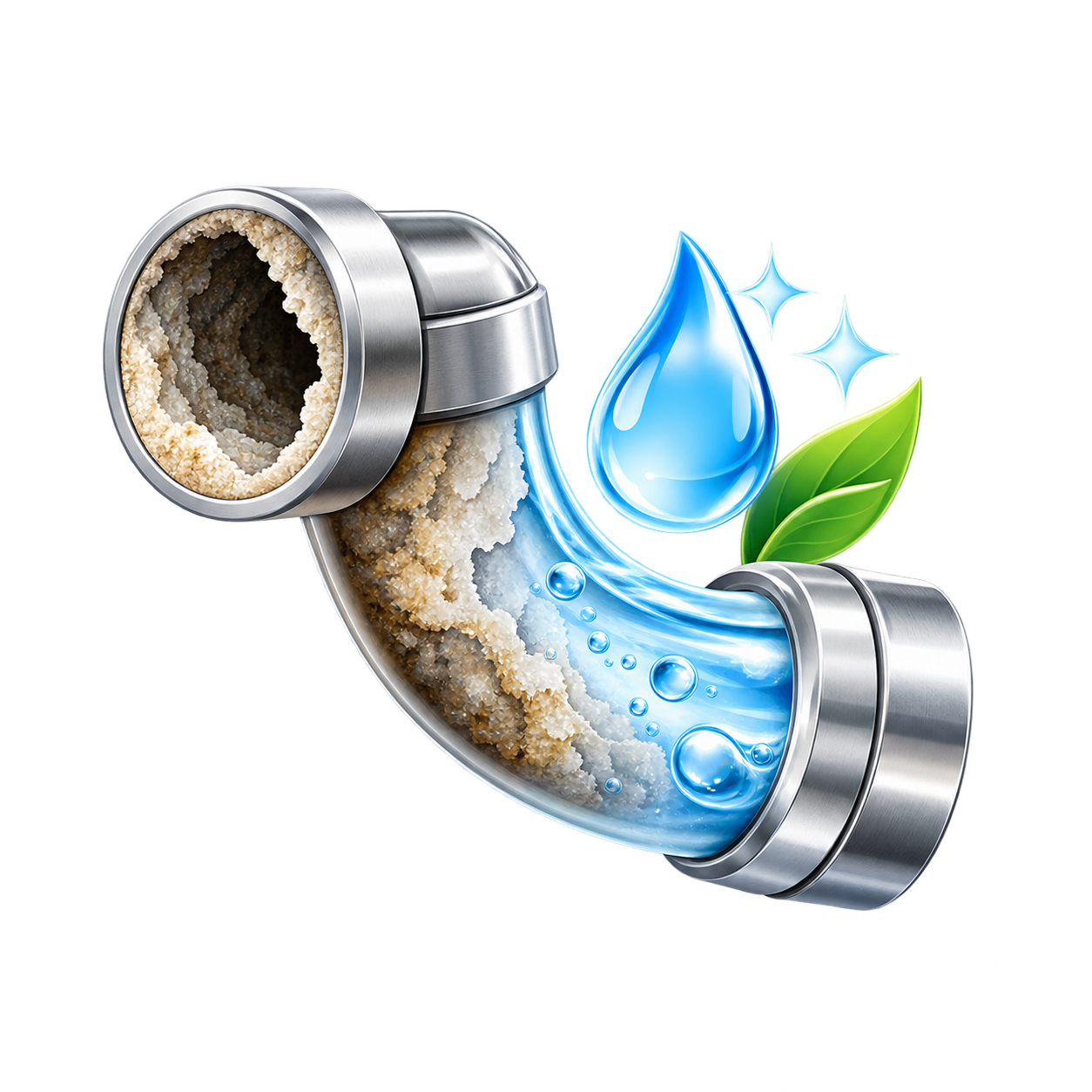
The treatment is therefore intended to reduce the ability of calcium carbonate to gradually form hard, strongly incrusted deposits on pipework, heating elements, water heaters and other household equipment.
How does SUPRION electrostatic technology work?
SUPRION uses the movement of water through an internal insulating tube to generate static electricity. This energy is used by the internal architecture of the device to create an electrostatic treatment zone through which the water flows.
Unlike a conventional galvanic device, the SUPRION electrodes are not in direct contact with the water. It therefore does not use a sacrificial zinc anode designed to dissolve progressively.
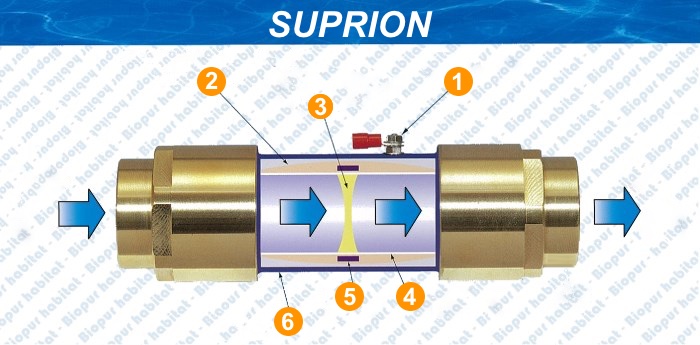
4. FRP tube generating static electricity 5. Pair of electrodes 6. Housing
How does SUPRION act on limescale formation?
Calcium carbonate can crystallise in different forms. Calcite is particularly associated with hard limescale deposits that can gradually adhere to surfaces.
The aim of electrostatic treatment is to influence crystallisation conditions so as to favour less adherent forms, including aragonite-type structures, and to encourage precipitation within the water itself rather than directly on surfaces.
The crystals formed in this way are more likely to remain suspended and be carried away by the water flow, rather than contributing to the gradual formation of a compact layer of limescale.
SUPRION is designed to limit the formation of new scale deposits within the installation.
The manufacturer also attributes a progressive curative action on certain existing deposits to the system. This should not be confused with instant descaling: the results depend in particular on the age of the deposits, their thickness, water quality and actual operating conditions.
Why choose a SUPRION electrostatic anti-limescale device?
SUPRION is particularly suitable for users who want to protect their entire water installation while avoiding the main constraints of a salt-based water softener.
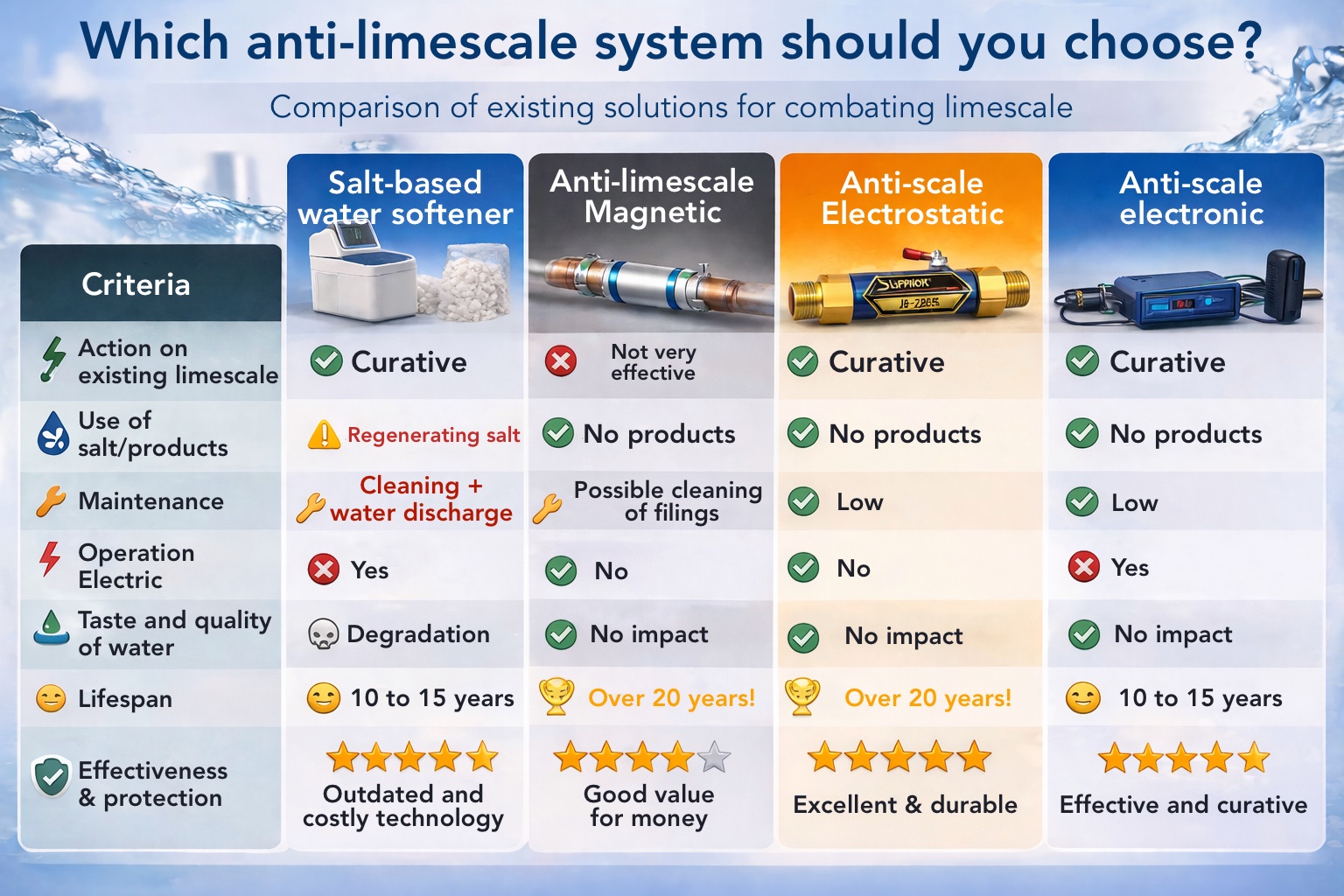
SUPRION compared with the most common anti-limescale solutions
This comparison provides a quick overview of where SUPRION technology sits in relation to the solutions most commonly found in domestic water installations.
When should you choose SUPRION?
SUPRION is particularly suitable when you want to protect an entire installation from the effects of limescale, particularly with hard or very hard water, without installing a water softener requiring salt, regeneration cycles and regular maintenance.
It is also suitable for installations where you want to retain the calcium and magnesium naturally present in the water while seeking to reduce limescale build-up.
Where should a SUPRION be installed?
To protect the entire property, SUPRION is installed on the main incoming water supply. The treated water is then distributed to the water heater, kitchen, bathrooms and the various appliances supplied with water.
The device is directional: the direction of flow indicated on the unit must be respected during installation.
Why combine SUPRION with water filtration?
SUPRION and filtration perform two different, but highly complementary, functions.
SUPRION acts on the behaviour of limescale and the conditions under which calcium carbonate crystallises. However, it does not provide a physical barrier against particles already present in the water.
Mains water can carry sediment, sand, traces of rust and even small fragments of limescale already formed in pipework upstream of your property.
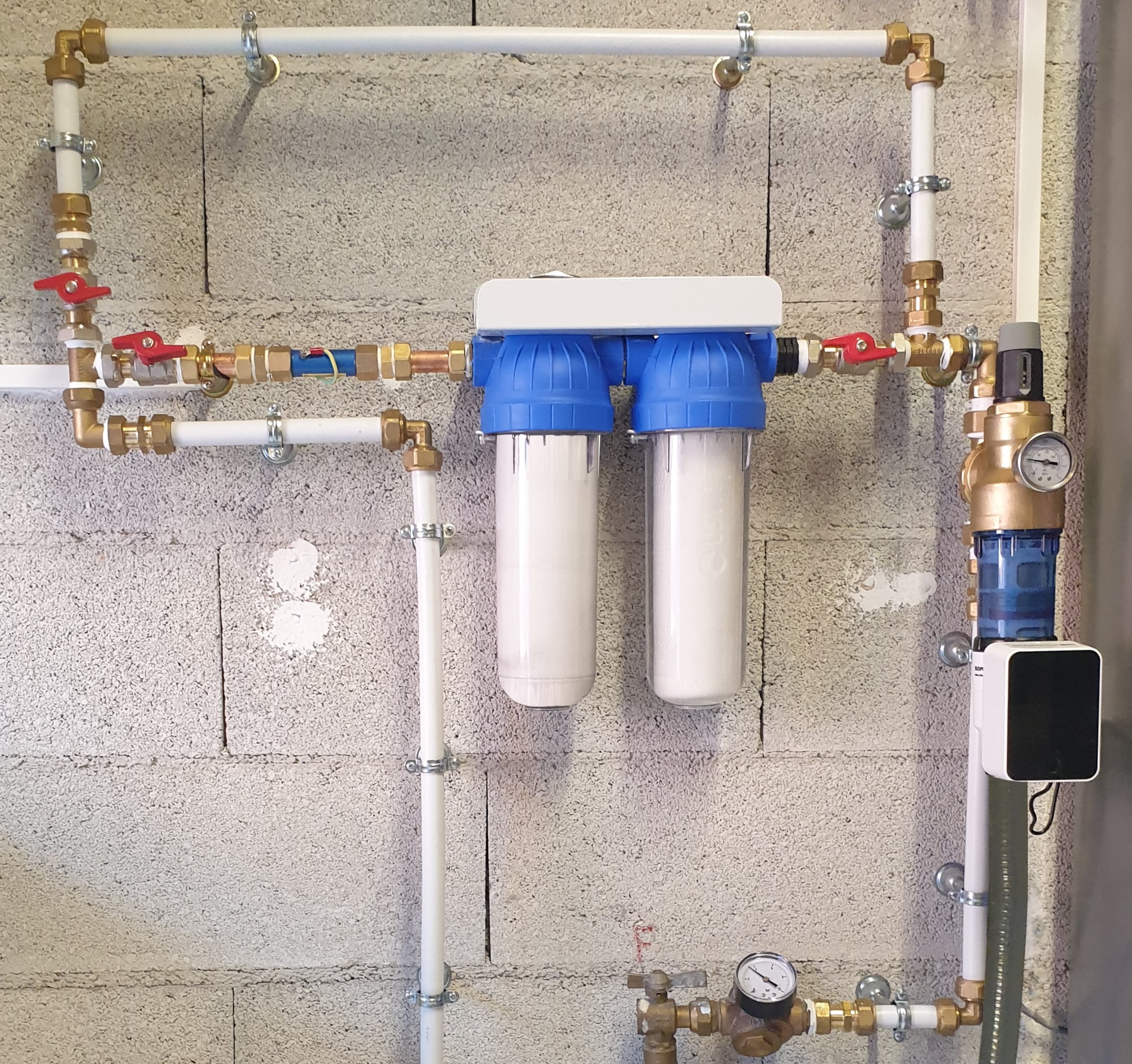
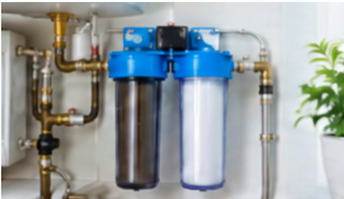
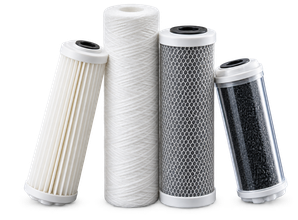
Filtration installed before the SUPRION therefore helps retain these solid particles before they enter the installation. When combined with an activated carbon cartridge, it can also help reduce chlorine, certain tastes and odours present in the water.
Filtration physically retains particles, while SUPRION acts on the behaviour of limescale.
Want to treat limescale and filter all the water in your home?
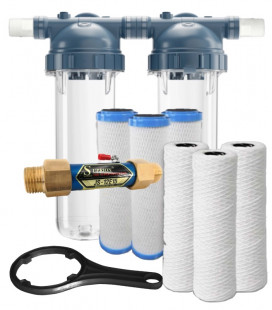
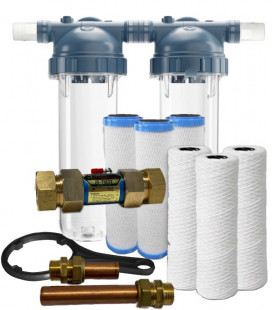
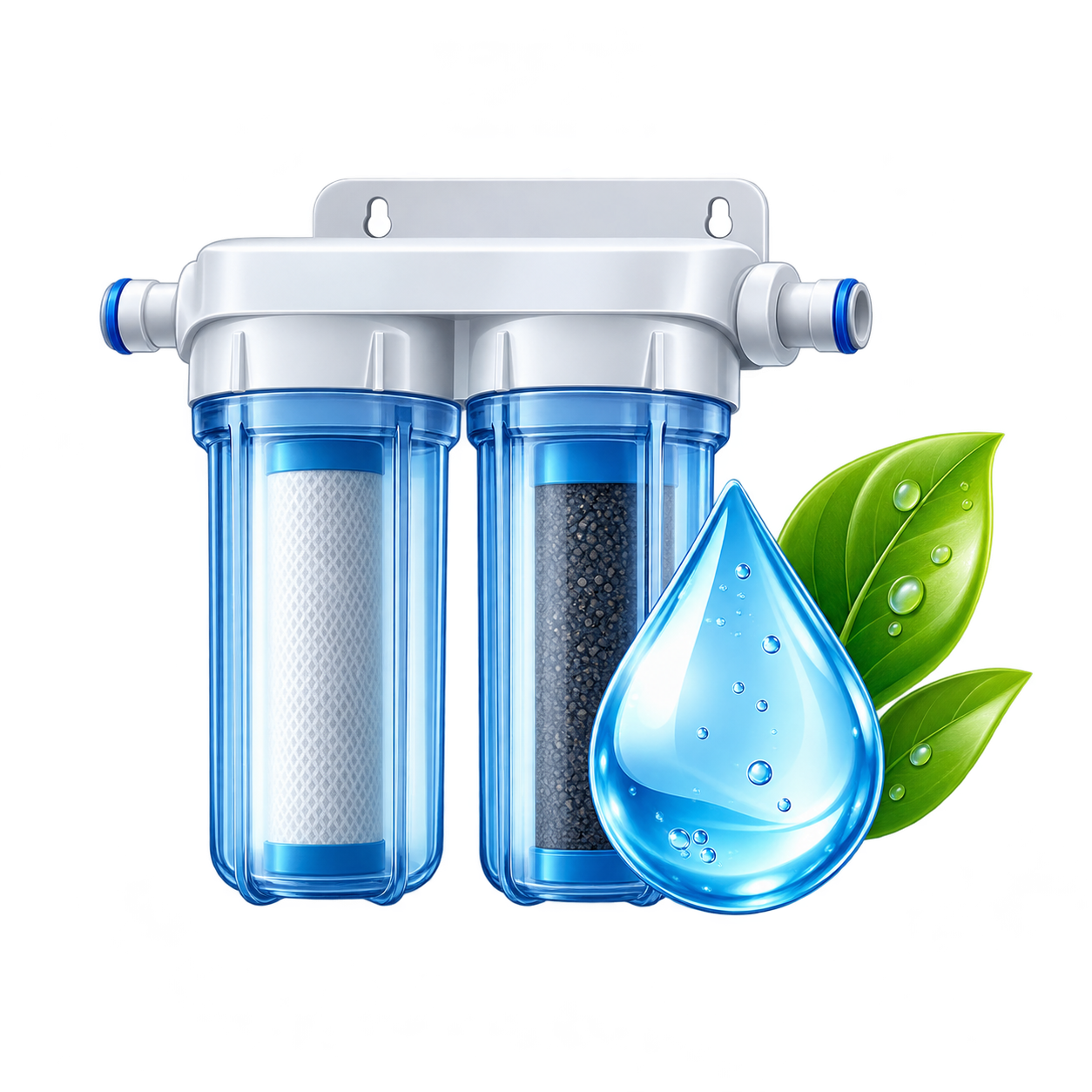
These two packs combine the SUPRION model suited to the property with duplex filtration using a sediment cartridge and an activated carbon cartridge.
This solution therefore combines electrostatic limescale treatment with physical water filtration on the main incoming supply.
A technology developed specifically for water treatment
SUPRION technology has its origins in the work of J. K. Ibbott, an Australian scientist and engineer who became interested in water treatment during the 1980s.
The SUPRION device using static electricity was subsequently developed during the 1990s. The technology is now used in a variety of domestic, commercial and industrial applications.

Which SUPRION should you choose?
The choice of model depends primarily on the maximum required flow rate and the diameter of the main water pipe.
For domestic installations, the number of bathrooms also provides a simple indication when choosing a model. The floor area of the property alone is not a sufficient criterion.
For models intended for higher flow rates, the table below also gives a reference flow rate. This helps compare the hydraulic capacity of the different units, but should not be confused with an absolute maximum flow rate.
| Model | Recommended use | Pipe diameter | Flow rate |
|---|---|---|---|
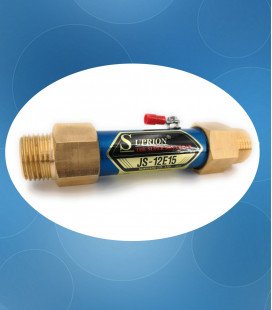
| JS-12e15 | Flat or house with up to 2 bathrooms | Internal pipe diameter up to approximately 18 mm | Up to 1.8 m³/h |
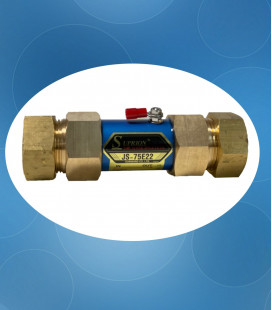
| JS-75e22 | House with higher water requirements, generally 2 bathrooms or more | Approximately 20 to 22 mm | Up to 3.4 m³/h |
| JS-100 | Large house, small collective installation or higher flow requirement | From approximately 25 mm – 1" | Approximately 4.3 m³/h* |
| JS-125 | Collective installation or high flow requirement | From approximately 32 mm – 1" 1/4 | Approximately 7.2 m³/h* |
| JS-150 | Collective, professional or high-flow installation | From approximately 40 mm – 1" 1/2 | Approximately 9.8 m³/h* |
| JS-250 to JS-1800 | Professional and industrial applications | 50 to 450 mm depending on the model | Sized according to the project |
Only need SUPRION anti-limescale treatment?
The two main domestic models are also available separately. This solution is particularly suitable if your installation already has upstream filtration or if you only want to treat the effects of limescale.










 English
  Français
  Deutsch
  Italiano
  Español
  Belgium