Buying guideReading time ~5 min
Which water purifier should you choose?
Activated carbon, ultrafiltration or reverse osmosis: not all solutions meet the same needs. The right choice depends on your water quality and the level of filtration you want, but also on your kitchen: keep your current tap, install a 3-way tap, choose a pull-out spray model or use a fold-down tap in front of a window.
Mains water
Purify at the point of use
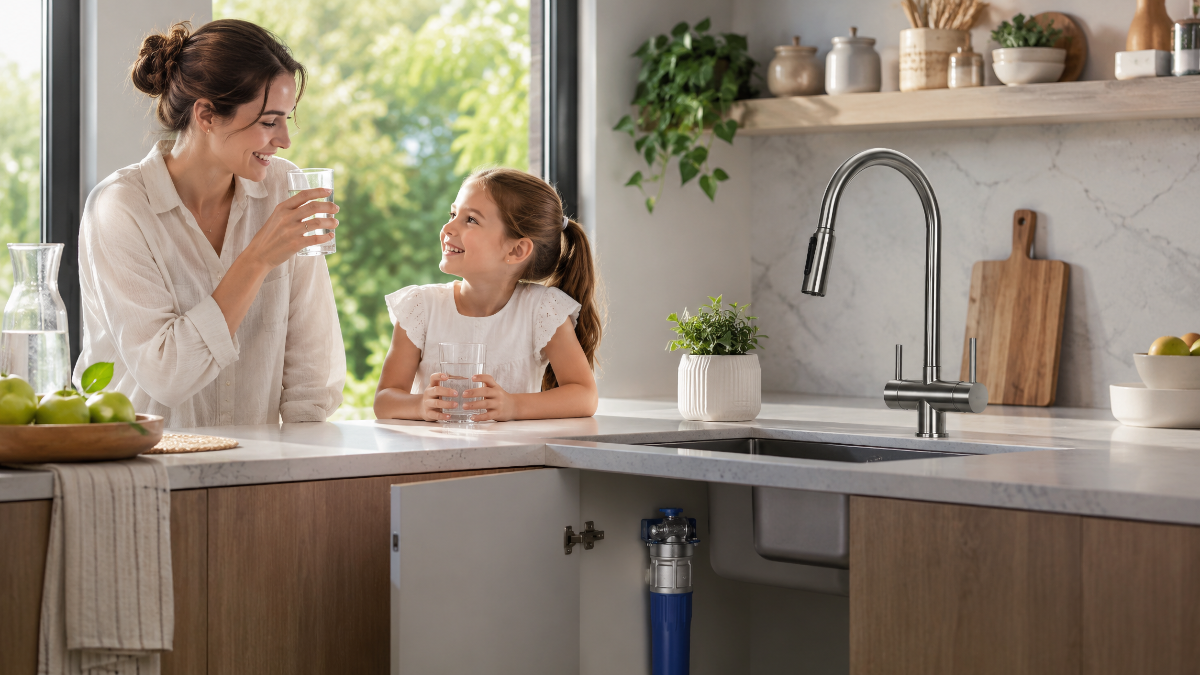
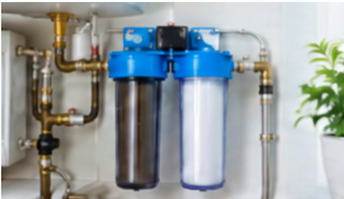
If you mainly want to improve drinking and cooking water, an under-sink purifier treats the water directly in the kitchen.
Filtration
0.01 µm ultrafiltration
The system combines several filtration stages, including a 0.01 micron ultrafiltration membrane.
Kitchen
Several tap options
Dedicated tap, standard 3-way tap, pull-out spray or fold-down model: choose the setup that best suits your kitchen.
Why choose an under-sink water purifier?
An under-sink purifier improves the water used for drinking and cooking without taking up worktop space and without necessarily filtering all the water in the home in the same way.
The right approach is not simply to look for “the best purifier”. First decide what you want to improve: taste, certain odours, chlorine, particles or the filtration level of your drinking water.
Good to know
Water filtration and limescale treatment are two different functions. An ultrafiltration membrane does not remove the dissolved calcium and magnesium responsible for water hardness. If limescale is a problem, a dedicated anti-limescale treatment should be considered as a complement.
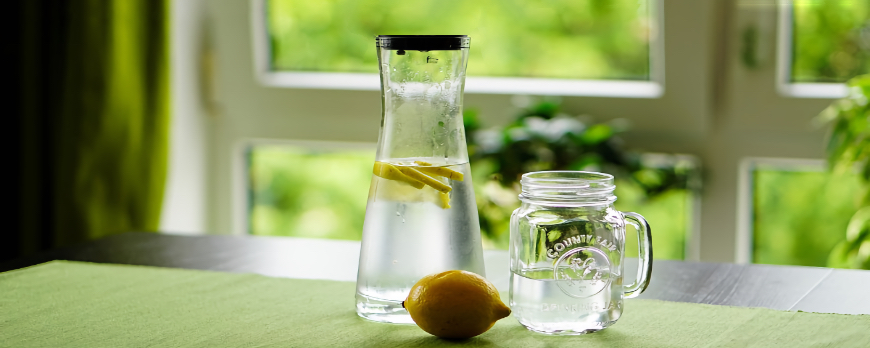
Pleasant-tasting water, available directly from the tap every day.
Activated carbon, ultrafiltration or reverse osmosis: which should you choose?
Activated carbon
Activated carbon is used in particular to improve the taste and odour of water and to help reduce chlorine and certain organic compounds.
Ultrafiltration
An ultrafiltration membrane provides very fine membrane filtration while allowing naturally occurring dissolved mineral salts to pass through.
Reverse osmosis
Reverse osmosis provides a much greater reduction of dissolved substances. It changes the composition of the water more significantly and generally requires a more complex installation.
How does the water purifier work?
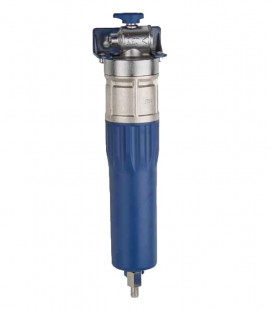
The SYR POU 7315 purifier combines several filtration stages in a single compact cartridge installed under the sink.
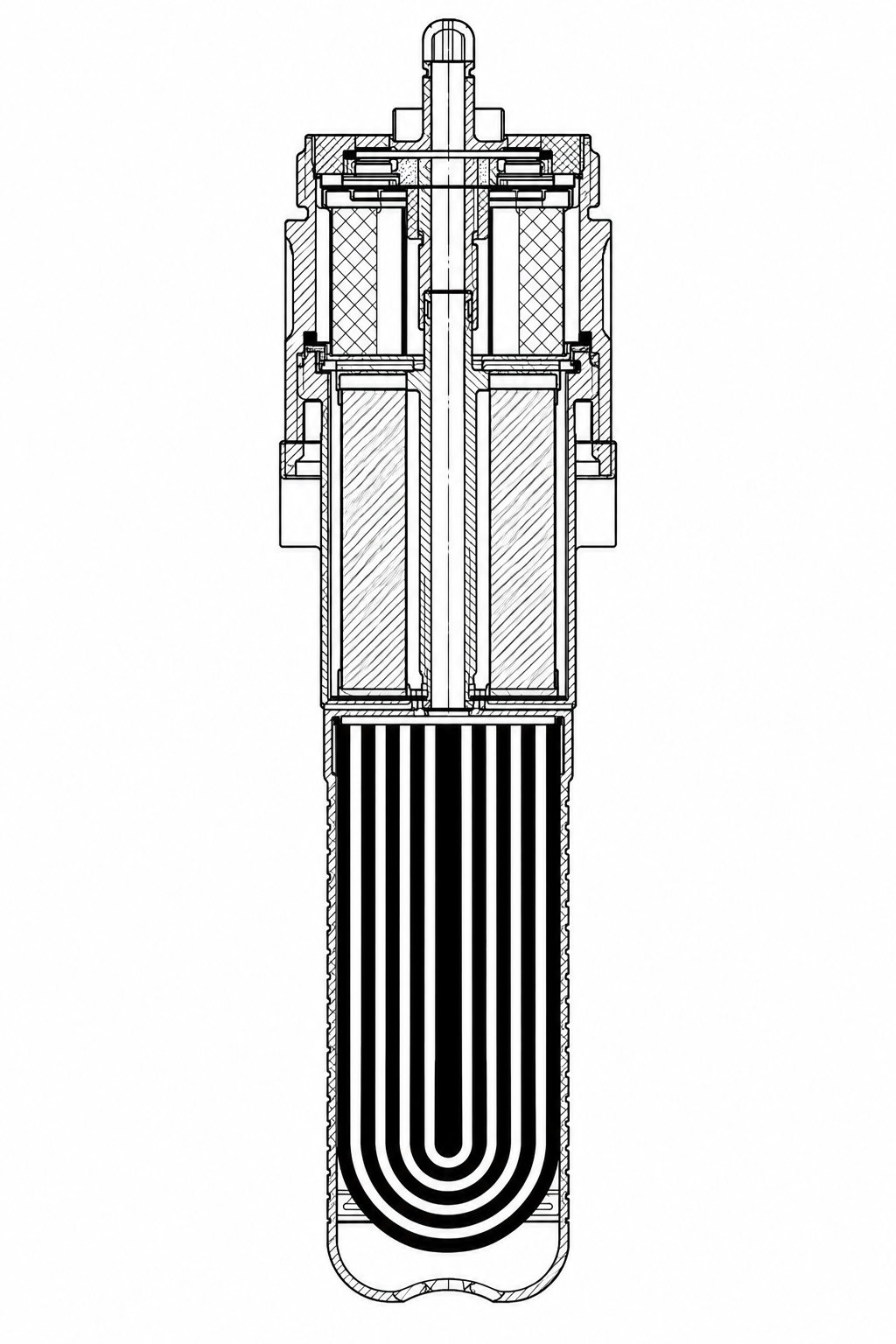
Technical cutaway of the SYR POU 7315 filtration system.
4 filtration stages in a single cartridge
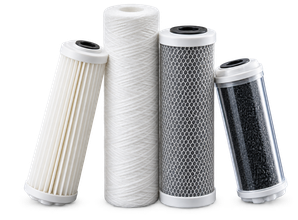
The system successively combines a stainless-steel sieve, a polypropylene filter element, activated carbon and an ultrafiltration membrane.
Activated carbon helps improve the taste and odour of the water, while the ultrafiltration membrane reaches a filtration fineness of 0.01 micron.
Unlike reverse osmosis, ultrafiltration allows the dissolved mineral salts naturally present in water to pass through and does not operate with the water discharge associated with the osmosis process.
What makes it different
Complete filtration in a compact format
Several filtration stages are combined in a single cartridge, helping to keep the under-sink installation compact and discreet.
A discreet under-sink installation
The filter unit fits under the sink, freeing up the worktop. It remains easy to access for maintenance while staying discreet in everyday use.
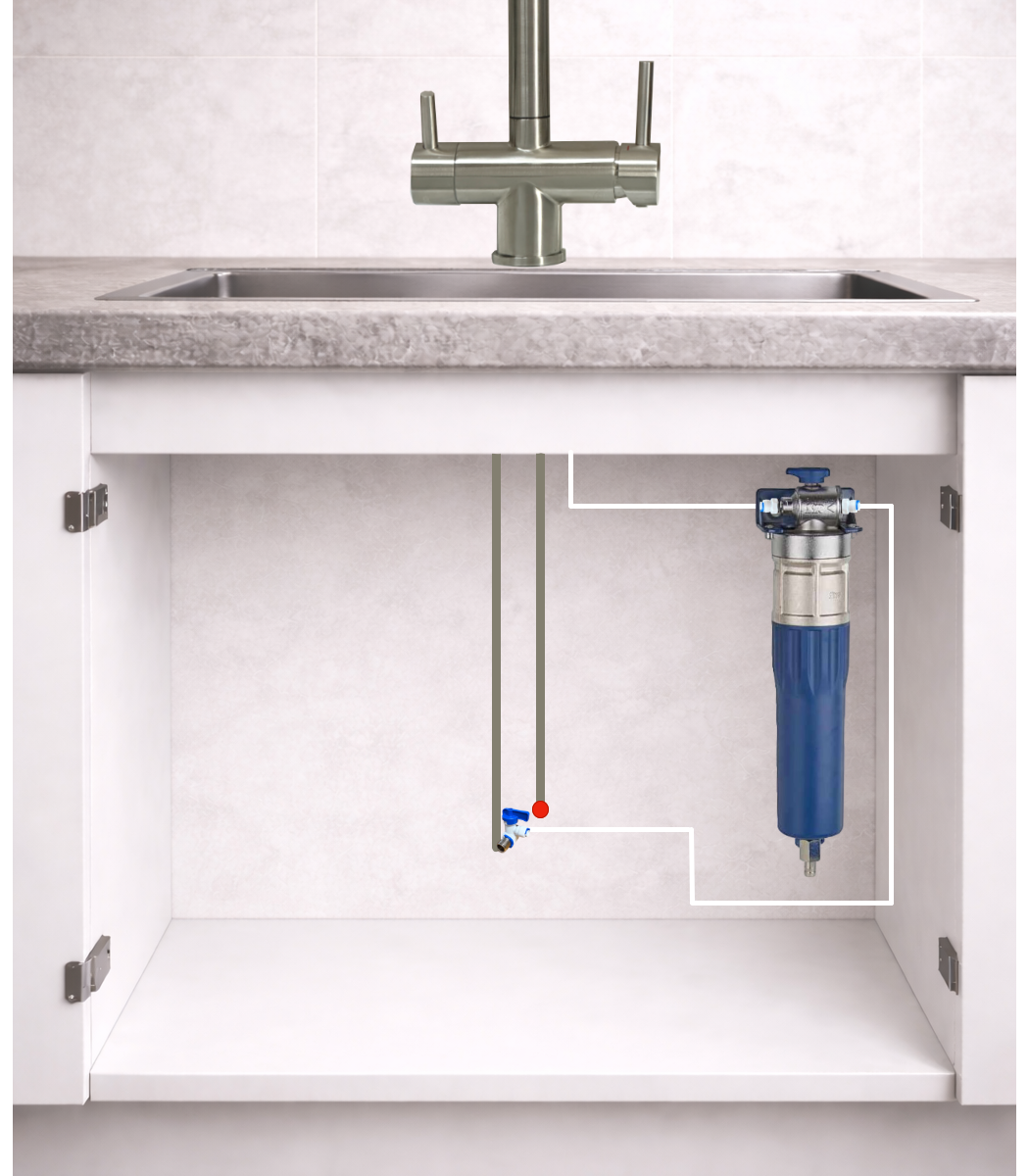
Purifier under the sink
The purifier is installed under the sink and connected to the circuit dedicated to purified water.
See the purifier in use
Presentation of the purifier, the tap options and the general under-sink installation principle.
Capacity, maintenance and everyday comfort
The purifier is designed for straightforward domestic use. Actual cartridge life depends on household consumption and the characteristics of the water being treated.
Capacity
Up to 7,500 litres
The cartridge should be replaced according to use, no later than 7,500 litres or 3 years.
Maintenance
Manual backwash
The system allows manual backwashing to help maintain good operating conditions.
Convenience
Purified water directly at the tap
Water for drinking and cooking is available directly, without having to fill a filter jug.
Water purifier or reverse osmosis system: what is the difference?
The two technologies do not have exactly the same purpose. A purifier combining activated carbon and ultrafiltration focuses mainly on filtration while allowing dissolved mineral salts to pass through.
Reverse osmosis goes much further in reducing dissolved substances. It can be relevant when this level of treatment is required, but it works on a different principle and generally involves a more complex installation.
For mains water that is already potable
A combination of mechanical filtration, activated carbon and ultrafiltration is an attractive solution when the main goal is to improve drinking and cooking water without automatically resorting to reverse osmosis.
Which purifier should you choose for your kitchen?
The purification system itself is the same. Simply choose the configuration that matches your tap setup and kitchen layout.
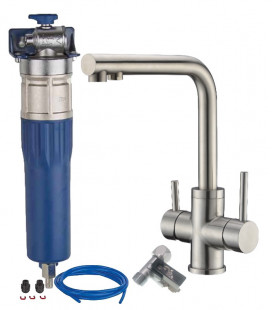
With a 3-way tap, purified water has a dedicated circuit and outlet, so it remains separate from hot and cold mains water and the outlet is suited to the purifier’s lower flow rate.
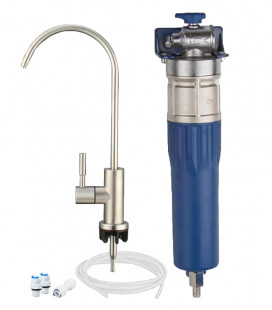
Choice 1
I am keeping my current tap
Choice 2
I want a single tap
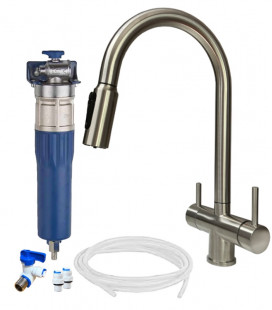
Choice 3
I want a pull-out spray
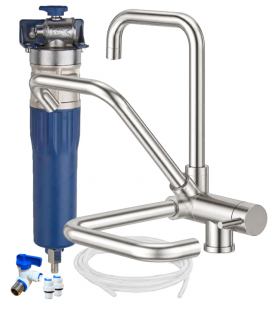
Choice 4
My sink is in front of a window
Water Purifier with Fold-Down 3-Way Kitchen Tap for Under-Window Installation – 304 Stainless Steel
Voir le produit → Choice 5
I want the purifier only
See taps and accessories sold separately
FAQ – Choosing the right water purifier
Which purifier should I choose if I want to keep my current tap?
The kit with a dedicated small tap is generally the best option. Your main mixer tap stays in place and a second small tap supplies purified water only.
What are the benefits of a 3-way tap?
A 3-way tap supplies hot water, cold water and purified water separately from a single tap. The purified-water channel has its own internal circuit. Filtered water therefore does not pass back through the common circuit used for mains water, where deposits can build up over time.
The third outlet also has an important benefit for the quality of the water stream. Flow after a purifier, and even more so after some reverse osmosis systems, is generally lower than direct mains flow. The dedicated outlet is sized for this lower flow rate, helping to produce a clean, regular and practical stream. If the outlet is too large for the available flow, the water can run unevenly or form an awkward stream.
Why choose a 3-way tap with a pull-out spray?
The pull-out spray adds convenience for rinsing the sink, washing food or filling certain containers, while keeping a separate circuit for purified water.
When should I choose a fold-down 3-way tap?
It is particularly useful when the sink is installed in front of a window. The spout can be folded down to allow the window to open.
What is the difference between a purifier and a reverse osmosis system?
A purifier combining activated carbon and ultrafiltration filters the water very finely while allowing dissolved mineral salts to pass through. Reverse osmosis reduces dissolved substances much more strongly and works on a different principle.
Does ultrafiltration remove limescale?
No. The calcium and magnesium responsible for water hardness are dissolved in the water and pass through the ultrafiltration membrane. A dedicated anti-limescale solution is therefore required if limescale treatment is needed.
Does a water purifier need electricity?
The purifier shown here works using mains water pressure and does not require an electric pump for normal operation. Some reverse osmosis systems or other specific appliances may, however, use a pump.
When should the cartridge be replaced?
The cartridge has a maximum indicative capacity of around 7,500 litres and should be replaced no later than 3 years if that capacity has not been reached. Actual life also depends on use and incoming water quality.











 English
  Français
  Deutsch
  Italiano
  Español
  Belgium