Selection guide Reading time ~9 min
Which anti-limescale solution should you choose?
Magnetic anti-limescale or SUPRION electrostatic treatment: both solutions work without salt and retain the minerals naturally present in the water, but they do not provide exactly the same level of protection. Water hardness, temperature, the age of the installation, the presence of existing limescale and the level of protection required all help determine which technology is most suitable.
Common point
No salt
Magnetic treatment and SUPRION work without salt, without regeneration and without treatment-related wastewater.
Essential point
Water hardness does not decrease
Calcium and magnesium remain in the water. These systems therefore do not work like an ion-exchange water softener.
Main difference
Preventive or curative
Magnetic treatment is mainly preventive. SUPRION adds a progressive curative action on existing deposits.
What does treating limescale really mean?
Limescale comes mainly from calcium and magnesium naturally present in water. When certain conditions occur, particularly when water is heated, calcium carbonate can precipitate and gradually form scale deposits.
These deposits can build up on heating elements, heat exchangers, water heaters, taps, household appliances and pipework.
A physical anti-limescale treatment does not aim to remove calcium and magnesium. Instead, it acts on the crystallisation process in order to make limescale less adherent and more easily carried away with the water.
Anti-limescale treatment and salt-based water softener are not the same thing
An ion-exchange water softener genuinely reduces water hardness by removing part of the calcium and magnesium. Magnetic treatment and SUPRION retain these minerals, so measured water hardness remains broadly unchanged.
Preventive or curative: what is the difference?
This is one of the main criteria for distinguishing our magnetic systems from SUPRION.
A preventive treatment acts mainly to limit the formation and adhesion of new limescale deposits.
A technology that also has a curative action continues to act progressively on certain deposits that are already present.
Mainly preventive
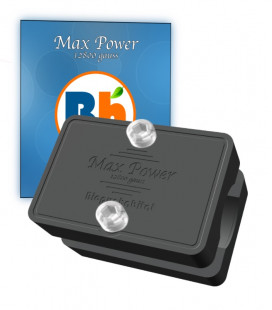
Magnetic anti-limescale
It is mainly designed to limit the formation and adhesion of new deposits. When correctly sized, it can greatly slow down limescale build-up, but we do not present it as a system intended to descale an old installation.
Preventive + curative
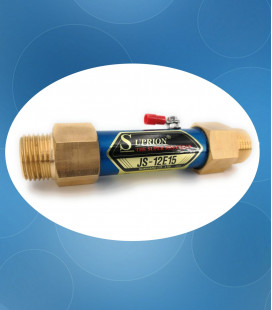
SUPRION electrostatic
SUPRION also limits the formation of new deposits, but the manufacturer additionally attributes to it a progressive action on existing limescale accumulations.
Why is water stagnation important?
A physical treatment does not chemically change the water: calcium and magnesium remain present. The effect on crystallisation is therefore not permanent.
After passing through the anti-limescale device, the water may retain a different crystallisation behaviour for a certain period. This is sometimes referred to as a memory effect. Its duration varies according to water composition, hardness, temperature, hydraulic conditions and stagnation time.
When water remains still for a long time
In a hot-water cylinder or a rarely used pipe, the initial physical effect can gradually diminish. Limescale may then regain a greater ability to form adherent deposits, and a thin layer may gradually develop again on some surfaces.
A technology that also has curative action therefore offers an additional advantage: it continues to act progressively on deposits that may remain or reappear.
Practical example
The case of a water heater
In a water heater, water may remain stationary for several hours while being heated regularly. A preventive treatment can already greatly slow down limescale build-up. A solution that also has curative action provides additional protection by continuing to act progressively on deposits already present or likely to reform.
The actual maintenance interval will nevertheless always depend on water hardness, temperature, water consumption and the design of the water heater.
Important
Curative action does not mean instant pipe descaling
SUPRION's curative action is progressive. It should not be confused with a genuine professional descaling operation on old pipework that is already heavily restricted by many years of limescale accumulation.
A significant loss of flow, very old pipework, tap aerators that regularly become blocked or heavily scaled equipment may require a professional diagnosis and pipe descaling before installing long-term protection.
The right approach is therefore: diagnose → clean if necessary → protect for the long term.
Read our guide to descaling household pipework → Magnetic or SUPRION: two levels of protection
Both technologies work without salt and without regeneration. The choice should therefore be based mainly on the conditions of your installation and the level of protection you require.
Preventive protection
Magnetic anti-limescale
Permanent magnets generate a powerful magnetic field around the pipe and act on the crystallisation conditions of calcium carbonate.
It is an excellent choice for protecting an installation that is not already heavily scaled, while offering a very good balance between effectiveness and cost.
The model must nevertheless be correctly sized according to the pipe and required water flow.
Enhanced protection
SUPRION electrostatic
SUPRION generates an electrostatic field as water passes through the device, without salt and without requiring a dedicated electrical supply.
Its preventive and curative action makes it our preferred solution when the water is very hard, when deposits are already present or when a higher level of protection is required.
The manufacturer's documentation also specifies operation at temperatures of up to 100 °C.
Comparison: magnetic anti-limescale or SUPRION?
| Criterion | Magnetic | SUPRION electrostatic |
|---|
| Principle | Magnetic field | Electrostatic field |
| Action | Mainly preventive | Preventive + curative |
| Existing limescale | No curative action claimed for our range | Progressive action on deposits |
| Hard water | Suitable when correctly sized | Very suitable |
| Very high hardness | Possible depending on sizing | Preferred solution |
| High temperature | Depending on model and conditions | Up to 100 °C according to manufacturer |
| Salt | No | No |
| Regeneration | No | No |
| Electrical supply | No | No dedicated supply |
| Reduction in hardness | No | No |
| Anti-limescale device alone | Fitted around the pipe | Installed in-line |
| With new filtration | The filter already requires work on the pipe | Filter and SUPRION installed in-line |
| Budget | More economical | Higher investment |
What about installation?
When installed on its own, the magnetic system has a clear advantage: it fits around the pipe without cutting it. SUPRION must be installed directly in-line.
However, this difference becomes much less important when creating a complete system with filtration.
Filtration and anti-limescale treatment are complementary
The filter retains sand, sediment, rust and other particles, whereas the anti-limescale device acts on the behaviour of limescale. If no filter is already installed, fitting one will require work on the pipe anyway. The choice between magnetic treatment and SUPRION can therefore be based mainly on the level of protection required.
Already have a filter?
The magnetic system retains a genuine installation advantage because it can be added without modifying the existing pipework.
Creating a complete new installation?
Since the pipework will already be modified to install filtration, base your choice mainly on water hardness, the condition of the system and the level of protection required.
Which solution should you choose?
Choose magnetic treatment if…
- you mainly want effective preventive protection;
- your installation is not already heavily scaled;
- you want an excellent effectiveness / cost ratio;
- you already have filtration;
- you want a simple, maintenance-free solution.
Choose SUPRION if…
- your water is very hard;
- deposits are already present in the installation;
- you want both preventive and curative action;
- you have equipment operating at high temperatures;
- you want the most complete salt-free protection in our range.
Then choose the correct model
Once the technology has been selected, the unit must be sized correctly. In particular, you should take into account the internal diameter of the main pipe, the maximum required flow rate and the number of water outlets that may be used simultaneously.
Small property
Apartment / small house
Generally moderate flow rate and few water outlets used at the same time.
Family home
Up to 2 bathrooms
Simultaneous use of showers, taps and household appliances must be taken into account.
Large house
Several bathrooms
Available flow rate and pipe diameter become particularly important to avoid undersizing the system.
FAQ – Magnetic or SUPRION?
What is the main difference between magnetic anti-limescale treatment and SUPRION?
Both systems work without salt and retain calcium and magnesium in the water. Magnetic treatment is mainly intended to prevent limescale build-up. SUPRION combines this preventive action with progressive curative action on certain deposits already present.
What does “curative action” mean?
Curative action means that the system does more than simply limit the formation of new deposits. In the case of SUPRION, the manufacturer states that the treatment also acts progressively on certain existing limescale accumulations. This should not be confused with instant descaling.
Can SUPRION replace professional pipe descaling?
Not when the system is already heavily restricted by many years of limescale build-up. An old installation with a significant loss of flow may first require professional diagnosis and genuine pipe descaling.
Can magnetic treatment descale an old installation?
We position our magnetic anti-limescale systems primarily as preventive solutions. For an installation that is already scaled, or when specific curative action is required, we generally recommend SUPRION.
What happens when water remains in a water heater for a long time?
Physical treatments do not chemically alter the water and their effect on crystallisation is not permanent. When water remains stagnant for a long time, its behaviour can gradually change and some deposits may reappear.
How long does the treatment effect remain in the water?
There is no universal duration. The memory effect depends in particular on water composition, hardness, temperature, flow conditions and stagnation time.
Which system should I choose for very hard water?
A correctly sized magnetic anti-limescale device can be used with hard water. When water hardness is particularly high or operating conditions are demanding, Biopur Habitat generally recommends SUPRION.
Can SUPRION operate with very hot water?
Yes. The manufacturer's documentation specifies operation at temperatures of up to 100 °C, making SUPRION particularly suitable for installations operating at high temperatures.
Do these systems reduce water hardness?
No. Calcium and magnesium remain present in the water. Unlike an ion-exchange water softener, these solutions do not remove the minerals responsible for water hardness.
Is magnetic treatment easier to install?
Yes, when installed on its own or when filtration is already present, because it fits around the pipe. If new filtration also needs to be installed, the pipework will have to be modified anyway, so this advantage becomes much less significant.
Should filtration be combined with anti-limescale treatment?
It is generally recommended. Filtration retains particles, sediment and rust, whereas the anti-limescale device acts on the behaviour of limescale. The two treatments are therefore complementary.
How do I choose the correct model afterwards?
You should take into account the internal pipe diameter, the maximum required flow rate and the number of water outlets that may be used simultaneously.