
No products
Prices are tax included
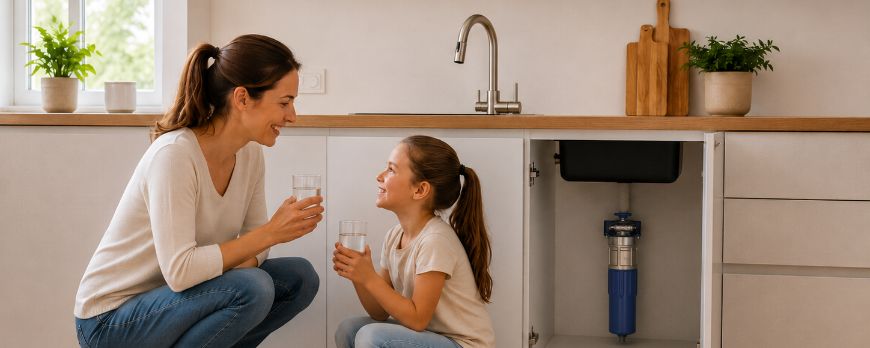
Water purifier: why choose one over a reverse osmosis system for tap water
Water purifier or reverse osmosis system? When it comes to tap water that has already been treated, the most effective solution isn’t always the most drastic. Find out why a well-designed under-sink water purifier can be the best choice for enjoying purer, more pleasant and more natural-tasting water every day.

When looking for a water purifier, you often come across comparison guides that present reverse osmosis systems as the most “powerful” solution. However, for tap water that has already been treated, this isn’t necessarily the most sensible option for everyday use.
The right approach is not to seek the most extreme filtration at any cost, but rather the filtration that best suits your water, your needs and your lifestyle. This is precisely where the under-sink water purifier comes into its own: it improves drinking water without unnecessarily altering its natural properties.
Water purifier or reverse osmosis system: don’t confuse the two
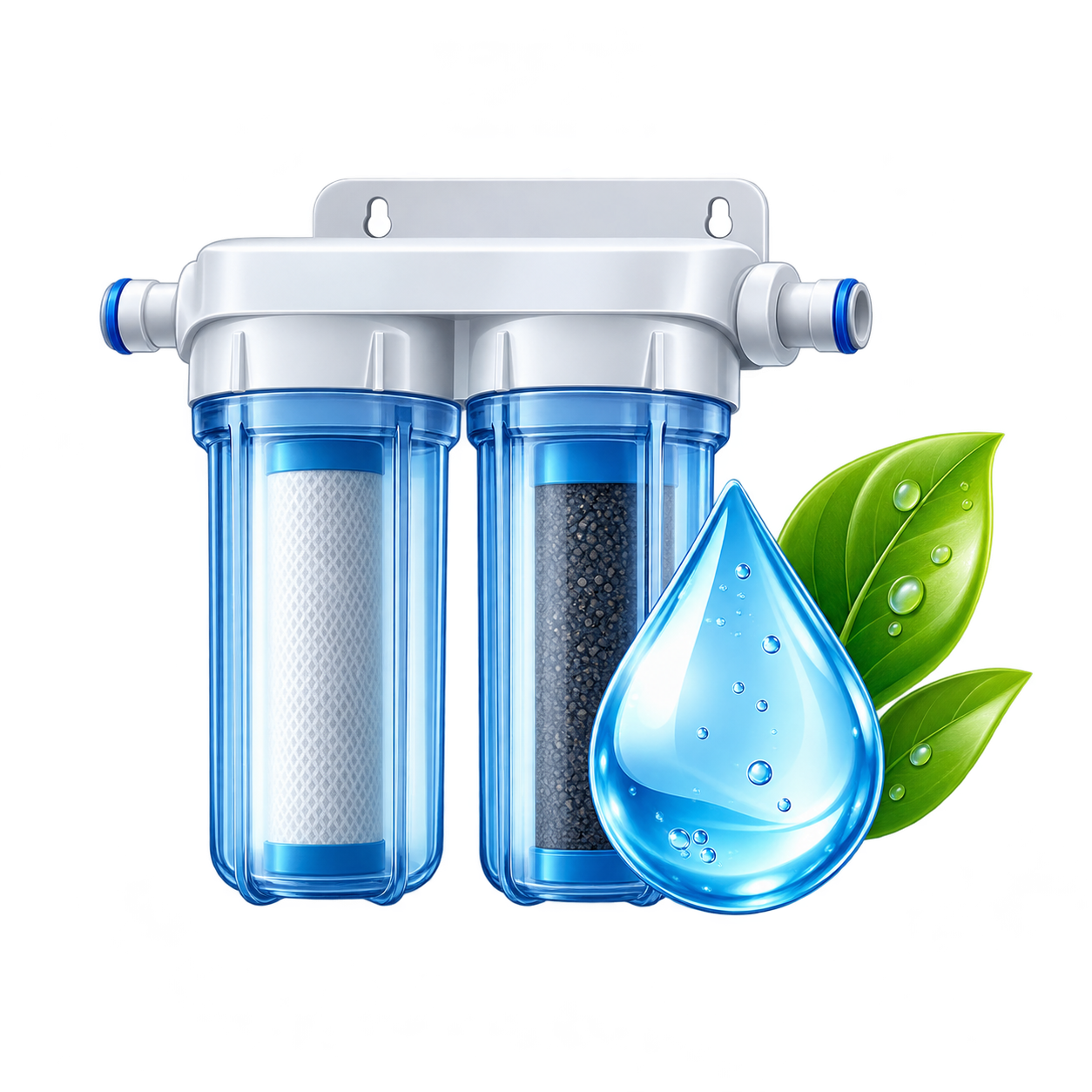
A water purifier for the kitchen is designed to improve the quality of the water we drink and use for cooking. Its aim is to provide water that is more pleasant, cleaner at the point of use, and better suited to everyday life.
The osmosis unit, on the other hand, is based on reverse osmosis, a much more advanced technology. It may be appropriate in certain very specific contexts, but it is not always the best solution for tap water that is already safe to drink and has already been treated.
In other words, the reverse osmosis system is not “better” in an absolute sense: it is simply more drastic. However, when it comes to tap water in the home, the most drastic solution is not always the wisest.
- Improves the taste and smell
- Reduces chlorine and particles
- Fine filtration without further treatment
- Compact under-sink design
- More natural water for everyday life
- Further processing
- Heavier installation
- Takes up more space under the sink
- Water discharge to be taken into account
- Water with a lower mineral content
When it comes to tap water, a water purifier is often the most sensible solution
In a household connected to the mains water supply, the aim is generally not to turn unfit water into drinking water, but to improve water that has already been supplied and treated, to make it more pleasant to drink and better suited to certain domestic needs.
That is exactly what a well-designed under-sink water purifier does: it works where it makes sense, namely on drinking water. It avoids over-treatment, is easy to use on a day-to-day basis, and allows for a more natural approach to water.
For many kitchens, this is therefore a far more balanced solution than a reverse osmosis system: fewer restrictions, less space taken up, greater simplicity and a result perfectly suited to the household’s actual needs.
Why a 4-in-1 filtration system is a highly effective solution
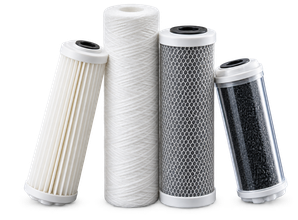
A 4-in-1 water purifier has the advantage of combining several complementary functions, without resorting to excessive or disproportionate treatment. In this case, filtration is based on four distinct stages, designed to work together.
1. A primary sediment filter
It is used to trap the coarsest suspended solids: sand, sediment, sludge, particles and impurities, whether visible or invisible. It clarifies the water as soon as it enters the system.
2. A second, finer sediment filter
This second stage targets smaller particles and further refines the mechanical filtration process. It provides the ideal preparation for the water before it passes through the adsorption stage and the membrane.
3. Coconut-based activated carbon
Coconut-based activated carbon is one of the cornerstones of water filtration. It is widely used in professional water treatment systems because it significantly improves taste and odour, reduces chlorine and adsorbs a large proportion of many undesirable organic compounds.
In a domestic water purifier, this is the key stage for producing water that is more pleasant to drink, more neutral and more enjoyable for everyday use. It is also one of the leading technologies when it comes to the removal of organic contaminants from water.
4. A 0.01-micron ultrafiltration membrane
The 0.01 micron membrane provides extremely fine ultrafiltration. It acts as a highly effective physical barrier against fine particles and a significant proportion of microbiological contaminants, whilst allowing small dissolved molecules naturally present in the water to pass through.
The main advantage of this type of water purifier is that it produces purer water without stripping it of its natural properties. The water remains more natural, closer to its original balance, whilst being significantly improved for drinking.
Depending on your setup, you can explore the 4-in-1 tap-free water purifier, choose a 4-in-1 water purifier supplied as a complete kit, or opt for a water purifier with a 3-way tap for even greater convenience in everyday use.
Why our water purifier model really stands out
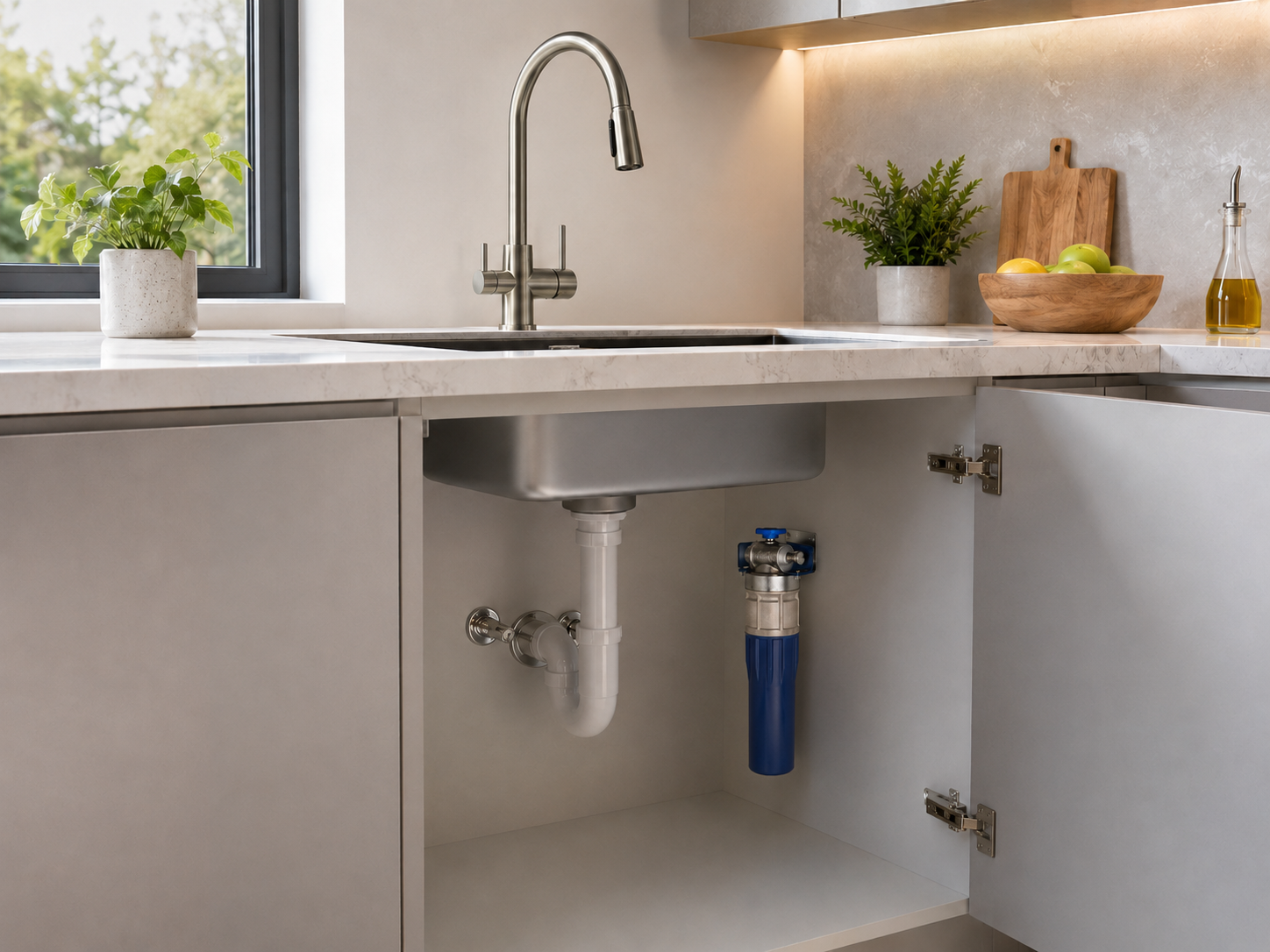
Beyond the filtration technology itself, the choice of model is of paramount importance. Not all water purifiers are created equal when it comes to size, ease of maintenance, lifespan or long-term reliability. It is precisely in these areas that our model offers real advantages.
A very compact design
This water purifier has been designed to fit easily under the sink, without turning the kitchen into a bulky technical installation. Its compact design is a real advantage for homeowners who want a discreet, clean and hassle-free solution for everyday use.
Just one cartridge – for greater simplicity
Another key feature is that the whole system is based on a single cartridge. This greatly simplifies maintenance, replacement and understanding of the system. It thus avoids the complexity of certain models that are more difficult to manage, whilst maintaining a high standard of filtration.
A backwashable system
The purifier is backwashable, which allows the system to be cleaned and helps to extend its service life whilst maintaining optimal performance. This feature is particularly useful for regular domestic use, as it helps to maintain filtration performance over time.
High filtration capacity
With a stated capacity of around 7,500 litres, this water purifier offers excellent value for a household. When used primarily for drinking water, this could cover nearly two years’ consumption for a family of four, depending on consumption habits.
A tried-and-tested product, supported and developed by a long-established manufacturer
This purifier is not a gimmicky product designed to capitalise on a passing fad. It is based on a professional design that has already stood the test of time. The model has been in production for over ten years, and the manufacturer SYR has extensive experience in the water sector. This provides reassurance regarding the product’s long-term reliability, the soundness of its design and the ongoing availability of consumables.
PFAS, microplastics and emerging pollutants: why water purifiers are meeting a real need today
The success of the water purifier can no longer be explained solely by the taste or smell of tap water. Nowadays, households are also concerned about PFAS, microplastics, pharmaceutical residues and, more broadly, all the emerging pollutants that are gradually being discovered in the environment.
This approach makes sense: we can only truly detect and measure the substances we are specifically looking for. However, there are thousands of chemical compounds in the environment, and many only become a matter of public concern as monitoring of them progresses. Choosing a water purifier therefore also means adopting a reasonable precautionary approach to contaminants for which monitoring practices evolve over time.
Activated carbon: a leading technology for treating many organic pollutants
Activated carbon is one of the key water treatment technologies, as it is capable of adsorbing numerous organic compounds. This is why it is found in the majority of reputable filtration systems, whenever there is a need to improve taste, reduce chlorine, eliminate certain odours and remove some undesirable organic compounds.
For current concerns such as pesticides, certain organic residues or certain PFAS, activated carbon remains a key technology. This does not mean that it treats all pollutants in the same way, nor that it alone is sufficient to claim to reduce every possible molecule, but it explains why it is considered one of the most important filter media in water purification.
Microplastics: the clear benefits of a 0.01-micron membrane
Microplastics are becoming an increasingly significant concern for the public. A 0.01-micron membrane offers a very clear advantage: it acts as an exceptionally fine physical barrier against small particles. For households wishing to have greater control over the quality of their drinking water, this is a practical and modern solution.
With this in mind, a water purifier fitted with a 0.01-micron membrane is not merely a matter of convenience. It is also a sensible response to growing health and environmental concerns regarding fine particles and contaminants that people do not want to find in their glass of water.
Medicinal drug residues and emerging pollutants: a serious approach must remain honest
When it comes to medication residues and certain other groups of emerging pollutants, the best approach is to be specific: a 4-in-1 water purifier with two sediment pre-filters, coconut-shell activated carbon and a 0.01-micron membrane offers a credible and reassuring solution, but the exact reduction capacity always depends on the molecule, the filter media, the flow rate and the system as a whole.
The real strength of the water purifier, therefore, does not lie in promising the impossible. It lies in offering a smart, reliable solution tailored to tap water, utilising a combination of technologies that effectively addresses today’s concerns: taste, odour, chlorine, particles, microplastics and emerging pollutants.

The limitations of a reverse osmosis system for tap water
Reverse osmosis has its place in certain contexts: very difficult water, heavily contaminated water, untreated water following appropriate analysis, or very specific situations where a significant reduction in certain dissolved contaminants is required.
But when it comes to tap water, reverse osmosis systems also have several practical limitations in everyday use. Firstly, the technology is heavier and often more bulky, with more complex storage and installation requirements. Secondly, it produces waste water, making it a far less water-efficient solution than a conventional under-sink water purifier.
Finally, reverse osmosis also removes a significant proportion of the naturally dissolved minerals present in the water. The result is water with a much lower mineral content, which is often perceived as having a more neutral, or even flatter, taste. For many households, this does not meet their day-to-day needs in a family kitchen.
In other words, a reverse osmosis system may be useful in specific cases, but it should not be presented as the obvious solution for all tap water.
How do you choose the right water purifier?
The best water purifier isn’t the one that filters the most “effectively”, but the one that best meets your actual needs.
- Are you mainly looking for water that’s more pleasant to drink?
- Do you want to reduce the taste of chlorine and certain odours?
- Are you looking for fine filtration, but without significantly demineralising the water?
- Are you looking for a credible solution to the problem of microplastics and emerging pollutants?
- Are you looking for a compact, simple and practical layout for your kitchen?
If the answer is yes, then a 4-in-1 under-sink water purifier is often a much more sensible choice than a reverse osmosis system for tap water.
It is a solution that is simpler, more practical and more natural, and which genuinely improves the quality of your water on a day-to-day basis without the constraints of extreme treatment.
Which water purifier should you choose for your kitchen?
Easily compare the different versions to suit your installation and requirements: the model without a tap, the complete 4-in-1 kit, or the version with a 3-way tap.
Why are more and more households opting for a water purifier?
The success of the water purifier is down to a simple principle: households want better-quality water on a daily basis, but they do not necessarily want a system that is more cumbersome, bulky and wasteful than it needs to be.
The modern water purifier meets this need perfectly. It fits under the sink, operates as close as possible to the point of use, improves the taste, clarity and usability of the water, whilst maintaining a more balanced approach than reverse osmosis.
When it comes to tap water, this is often the key difference: the water purifier treats just the right amount, where it’s needed, without going any further than necessary.
FAQ: Water purifier or reverse osmosis system?
Why choose a water purifier rather than a reverse osmosis system?
Because, when it comes to tap water that has already been treated, a water purifier often offers a simpler, more compact and more natural solution that is better suited to everyday use.
Does the water purifier remove PFAS?
The issue of PFAS depends on the filter medium, the overall system and any product certifications. In practice, activated carbon is one of the most widely studied technologies for this group of pollutants, but its exact performance always depends on the installation and the tests carried out.
Is a 0.01-micron membrane effective against microplastics?
Yes, that is precisely one of its key benefits. Such fine filtration provides a highly effective barrier against small particles and enhances the overall performance of the water purifier for everyday use.
Which model should I choose for the kitchen?
You can compare the different models on our which water purifier to choose page, then decide whether to go for a model without a tap, a complete 4-in-1 kit or a model with a 3-way tap.
Conclusion
If you’re looking for a reliable solution to improve your tap water on a day-to-day basis, an under-sink water purifier is often the best choice. In many households, it makes more sense, is more balanced and is better suited to domestic use than a reverse osmosis system.
With a 4-in-1 filtration system combining two sediment pre-filters, coconut-shell activated carbon and a 0.01-micron membrane, it is possible to obtain water that is purer, more pleasant to drink and more natural, without the drawbacks of extensive demineralisation.
Are you looking for the model best suited to your kitchen?
Visit our page which water purifier to choose to discover the available models and compare the tap-free version, the 4-in-1 water purifier and the water purifier with 3-way tap.
Related products
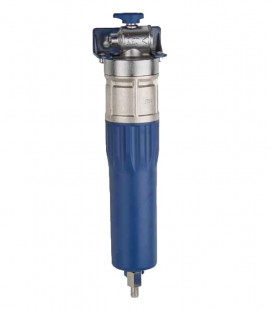
Water purifier without accessories
320,50 €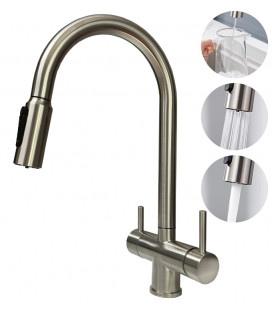 109,00 €
Leave a CommentLeave a Reply
Blog archives
Blog categories
Latest Comments

BIOPUR habitat
on How to get rid of the limestone !!!
BIOPUR habitat
on Water Softener and Limescale Remover Part 3,...
BIOPUR habitat
on Which water flow rate depends on the pipe diameter
BIOPUR habitat
on Water softener or anti-limescale filter: what...










 English
  Français
  Deutsch
  Italiano
  Español
  Belgium