Selection guide Reading time ~7 min
Which water filter should I choose for my home?
Self-cleaning, compact, duplex or triple filter: the right choice depends on your water quality, the filtration level you need, the available space, required flow rate and the amount of maintenance you are willing to carry out.
Use
Whole house
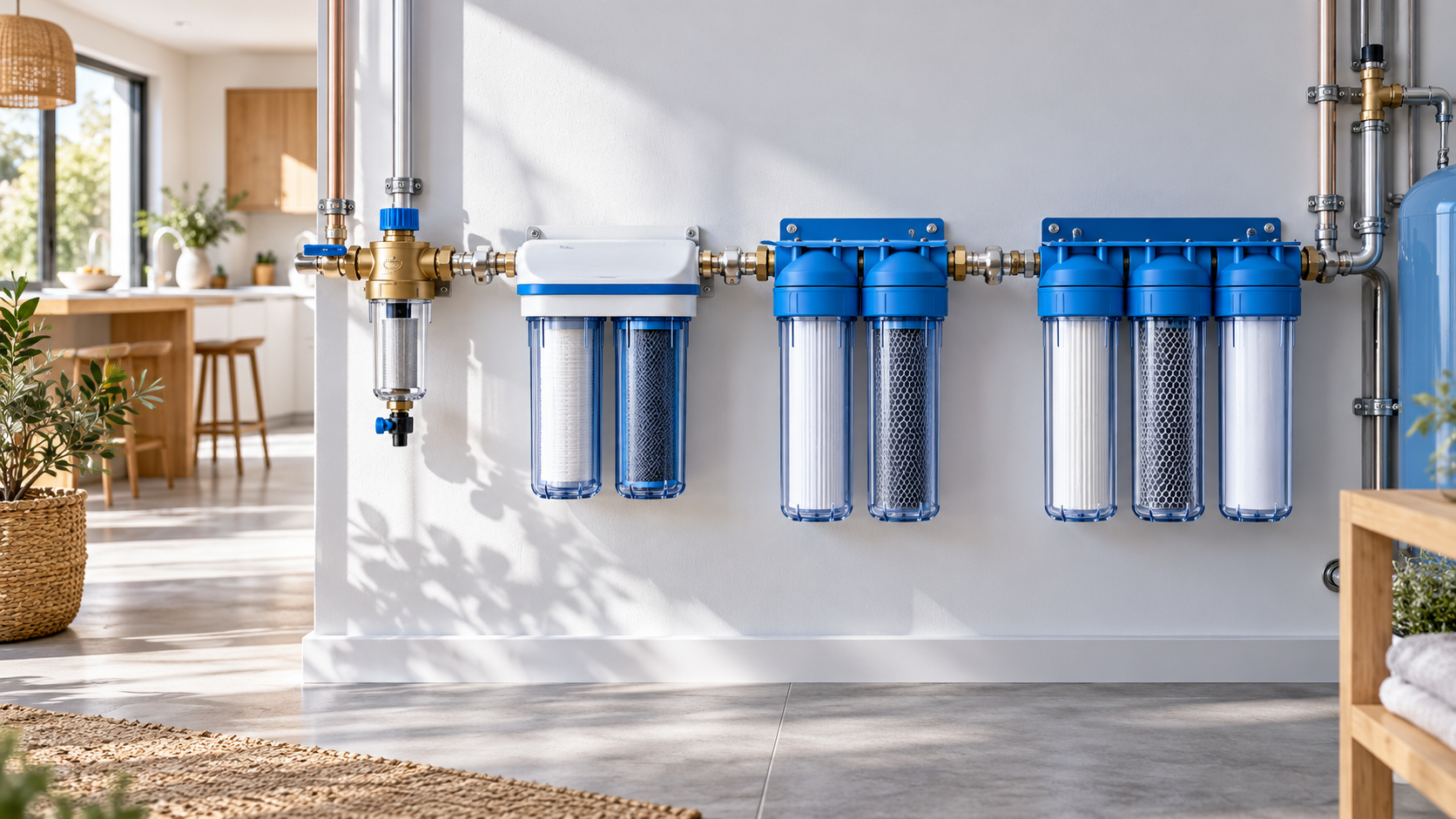
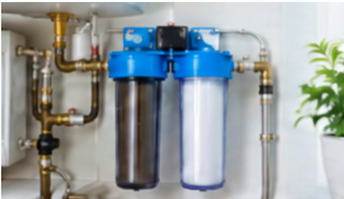
Whole-house filtration is installed on the incoming water supply to protect the installation and filter the water before it is distributed throughout the property.
Principle
Progressive filtration
The coarsest particles are generally removed first, before refining the filtration or adding activated carbon if required.
Choosing well
Filtration, flow & maintenance
Finer filtration is not always better: it must remain compatible with the flow rate required by the home and the level of maintenance you want.
Why filter the water throughout your home?
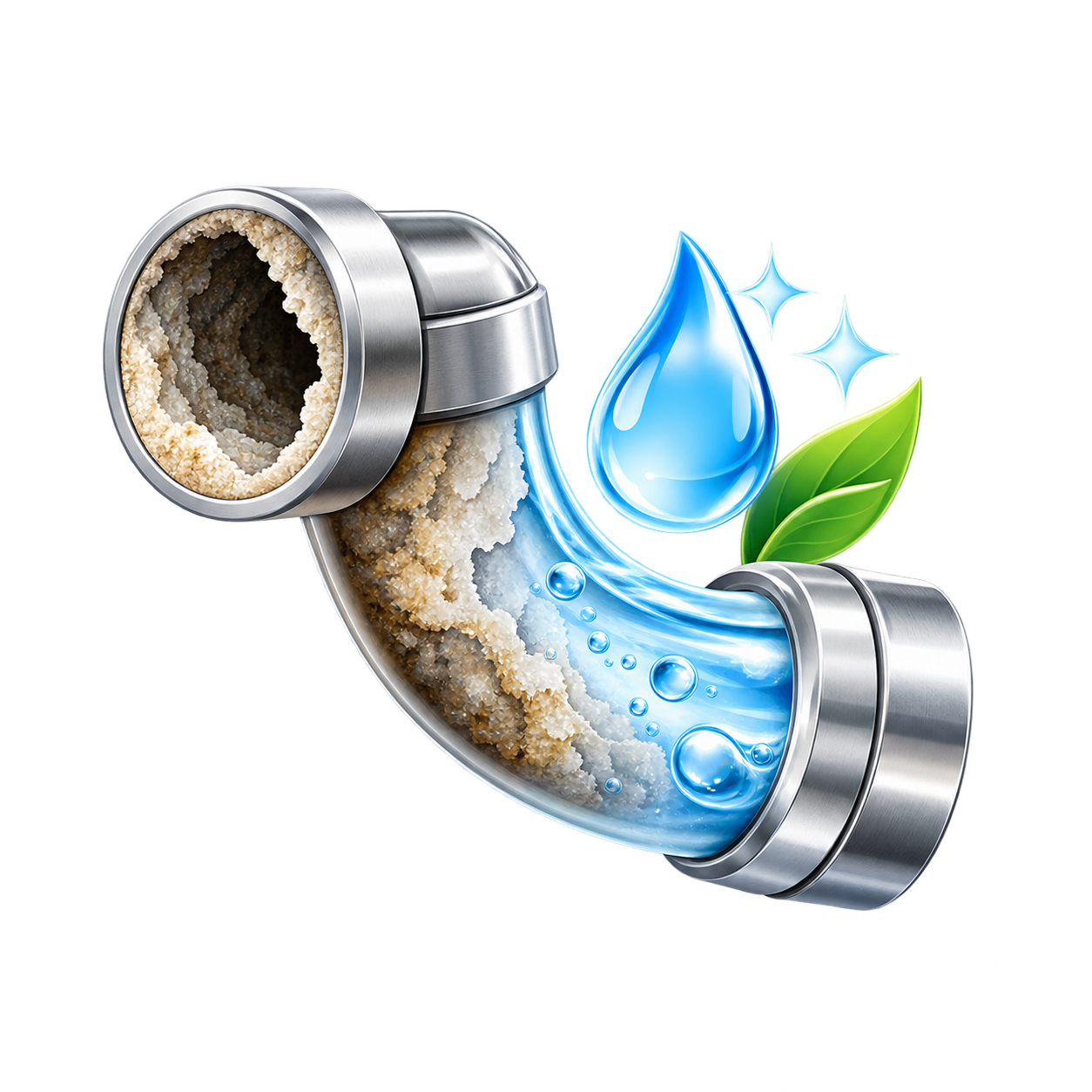
Even mains water can carry particles originating from pipework or maintenance work on the water network: sand, rust, deposits or other suspended matter.
A filter installed on the main water supply can retain some of these elements before the water reaches taps, the water heater, household appliances or additional treatment systems.
Filtering water is not the same as treating limescale
A sediment cartridge, activated carbon filtration or a self-cleaning filter does not replace a dedicated anti-limescale system. Both functions can be combined in the same installation.
Self-cleaning, compact, duplex or triple filter: which should you choose?
There is no single filter that suits every installation. The choice mainly depends on the filtration level required, the space available, the number of stages you want and how much maintenance you wish to carry out.
Minimum maintenance
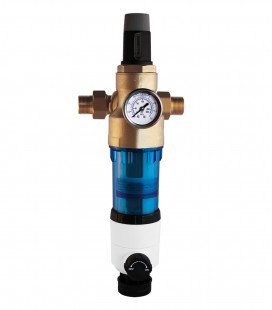
Self-cleaning filter
For users who mainly want to protect the installation from larger particles while keeping maintenance to a minimum. The screen is cleaned by backwashing and filtration reaches approximately 40 microns.
Space-saving
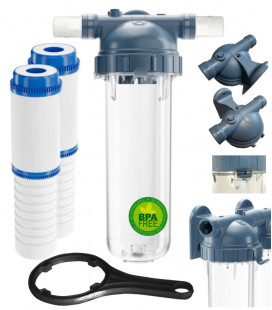
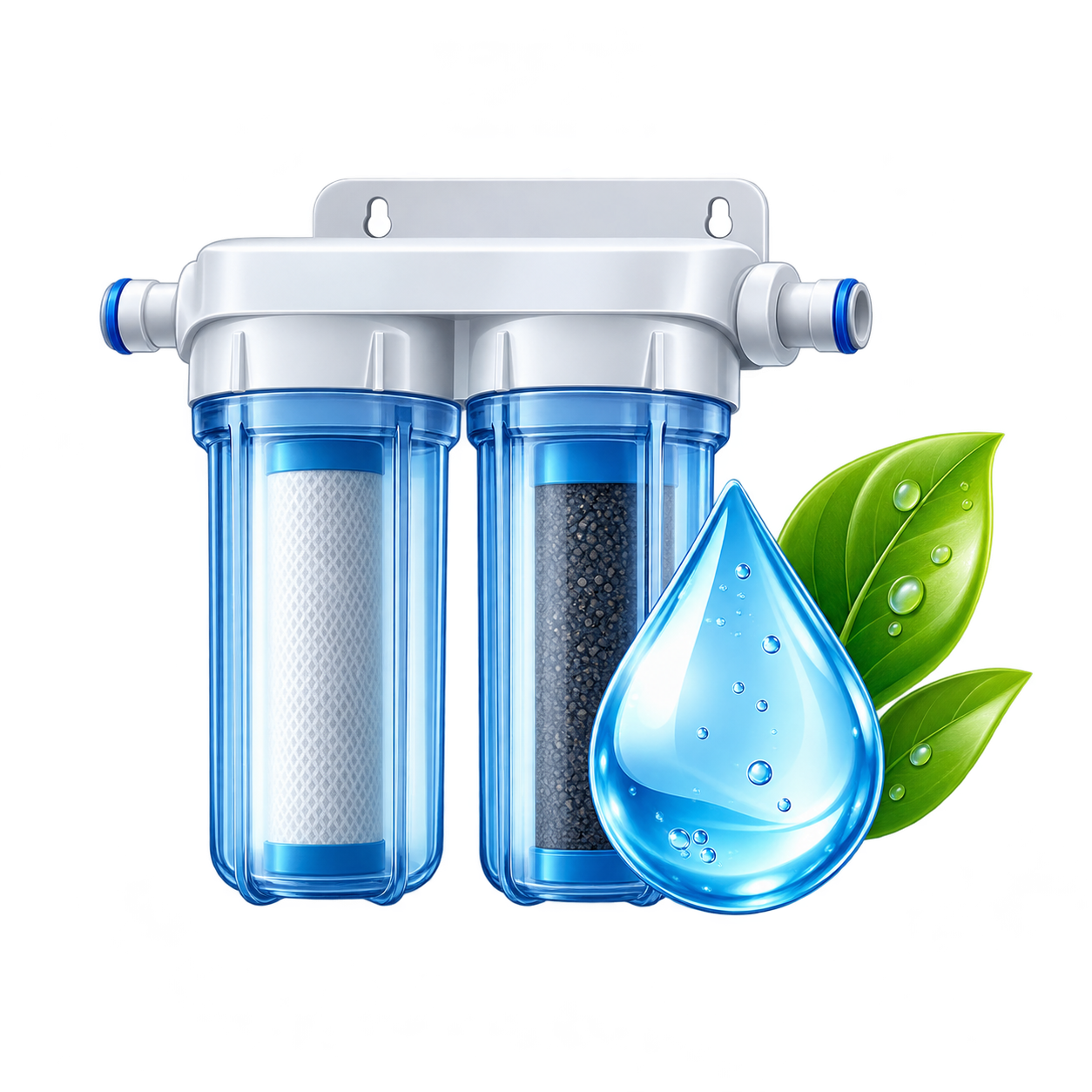
Compact 2-stage filter
A good solution when installation space is limited. A single housing can combine several functions using a combination cartridge, including sediment filtration and activated carbon.
Most versatile
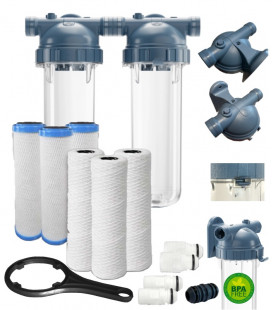
Duplex filter
Two independent housings allow two different cartridges to be combined. It is an excellent compromise between size, filtration level and installation flexibility.
Most flexible
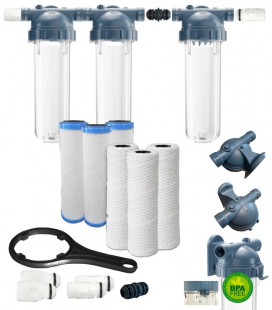
Triple filter
Three housings make it possible to build a progressive and highly customisable filtration system. This is particularly useful when several stages or a specialist cartridge need to be combined.
Why can a self-cleaning filter be a good choice?
A self-cleaning filter has a slightly different role from cartridge filters. Its filtration level of around 40 microns is relatively coarse, but it has one major advantage: very little routine maintenance is required.
Advantages
Simple backwashing, no regular filter cartridge replacement, compact dimensions and effective first-stage protection against larger particles.
Limitations
Filtration at 40 microns does not replace finer 5 or 10 micron filtration. It also does not provide the functions of an activated carbon cartridge.
It can also be used as a pre-filter
A self-cleaning filter can be used on its own when the aim is simply to remove larger impurities, but it can also be installed as the first stage before a finer cartridge filter. This helps reduce clogging of the downstream cartridges.
With cartridge filters, the cartridge determines the filtration
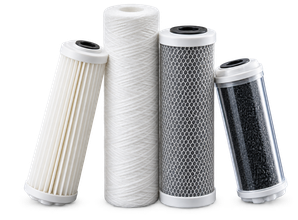
A filter housing does not treat the water on its own. The technology inside the cartridge largely determines the filtration function.
Sediment cartridge
It is generally used as the first stage of fine filtration and helps retain suspended matter such as sand, rust, sludge and other particles.
Activated carbon
Activated carbon complements mechanical filtration and can notably help improve taste and odour, as well as reduce chlorine and certain compounds depending on the filter media used.
Specialist cartridge
Specialist cartridges can be added where a particular issue has been identified. The choice should be adapted to the actual water quality.
Combination cartridge
Several filter media are combined in one cartridge. This is particularly useful when several functions are required while keeping a single housing.
40, 10 or 5 microns: which filtration level should you choose?
The value expressed in microns indicates the filtration level. The lower the figure, the finer the particles the filter can retain.
However, finer filtration can also clog more quickly and create a greater pressure drop. The right choice is therefore a balance between filtration quality, available flow rate and maintenance frequency.
Around 40 µm
Pre-filtration of larger particles. Low-maintenance and particularly suited to a self-cleaning filter.
10 µm
Intermediate filtration that retains finer particles while generally maintaining a good water flow rate.
5 µm
Finer mechanical filtration, useful when you want to retain fine sand, silt, rust and other particles more effectively.
The right approach: progressive filtration
When water contains a large amount of particles, it is often more logical to begin with coarse filtration and then progressively refine it. The first stages protect the following stages and reduce premature clogging.
Comparison: which filter best suits your needs?
| Solution | Best suited to | Filtration | Maintenance | Main advantage |
|---|
| Self-cleaning | General protection and minimum maintenance | Pre-filtration down to around 40 µm | Backwashing | No regular filter cartridge replacement |
| Compact 2-stage | Installations with limited space | Depends on the cartridge used | Periodic cartridge replacement | Several functions in a single housing |
| Duplex | Versatile whole-house filtration | 2 independent cartridges | Cartridge replacement | Excellent balance between size and flexibility |
| Triple | Several successive treatment stages | Up to 3 independent cartridges | Several cartridges to monitor | Most flexible solution |
The 4 criteria to consider before choosing
1. Water
What you want to filter
Larger particles, sand, rust, taste, odour or a specific issue: start with the actual problem.
2. Flow rate
Household requirements
A house with several outlets used at the same time requires a greater flow rate than a small property.
3. Space
Available installation space
A compact or self-cleaning filter may be preferable where space is limited, while duplex and triple systems offer more possibilities.
4. Maintenance
Backwashing or cartridges
If you want to minimise consumables, a self-cleaning filter is very attractive. Cartridge systems, however, provide finer and more flexible filtration.
In which order should the filtration stages be installed?
When several filtration systems are combined, the coarsest stages are generally installed first to protect the finer stages downstream.
Water supply → Optional pre-filtration → Sediment → Activated carbon → Optional additional treatment → Home
With a self-cleaning filter
A self-cleaning filter can be installed at the beginning of the system to retain larger particles before a duplex or triple filter. This helps protect the finer cartridges downstream.
If you add an anti-limescale system
In an installation combining filtration and limescale treatment, particle filtration is generally installed before the anti-limescale system.
Filter, purify or treat limescale: three different needs
Filter the whole house
To retain particles and create a general filtration system on the main water supply.
View water filters → Special case
Rainwater, spring, borehole or well water
Water from a private source can have very different characteristics from mains water. Treatment should ideally begin with a water analysis and may require pre-filtration, several cartridge stages, specialist treatment or UV sterilisation.
View solutions for non-mains water → FAQ – Choosing the right water filter
Which filter should I choose for mains water?
It mainly depends on what you want to retain. A self-cleaning filter may be sufficient to protect the installation from larger particles. For finer filtration, a compact, duplex or triple filter fitted with suitable cartridges will be more appropriate.
When should I choose a self-cleaning filter?
It is particularly useful when you want first-stage protection with very little maintenance. Filtration down to approximately 40 microns retains larger particles and cleaning is carried out by backwashing. However, it does not replace finer filtration or activated carbon filtration.
What is the difference between a compact and a duplex filter?
A compact filter combines several functions in one housing using a combination cartridge, significantly reducing the space required. A duplex system uses two independent cartridges and therefore offers greater flexibility.
Which cartridge should be installed first?
A sediment cartridge is generally installed first to retain particles before activated carbon filtration or more specialist treatment.
Is 5-micron filtration always better than 10 or 40 microns?
No. The lower the micron rating, the finer the filtration, but the filter may also clog more quickly and cause a greater pressure drop. The filtration level must therefore be adapted to water quality, required flow rate and the desired level of maintenance.
Does a water filter remove limescale?
Conventional sediment, activated carbon or self-cleaning filtration does not perform the same function as dedicated limescale treatment. If limescale is the main issue, a specific solution should be added.
What is the difference between a whole-house filter and an under-sink purifier?
A whole-house filter treats water as it enters the property and is mainly designed to retain particles. An under-sink purifier more specifically treats water used for drinking and cooking at the point of use.
Can well, borehole or rainwater be filtered using the same equipment?
Some filters can form part of the installation, but non-mains water requires a different approach. A water analysis helps determine the treatments actually required and whether to add pre-filtration, specialist media or UV sterilisation.










 English
  Français
  Deutsch
  Italiano
  Español
  Belgium